James Booker: The Piano Prince of New Orleans
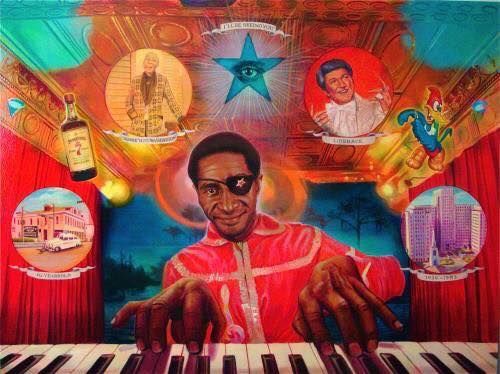
James Carroll Booker III (December 17, 1939 – November 8, 1983) was an American New Orleans rhythm and blues keyboardist and singer. Flamboyant in personality and style, and possessing extraordinary technical skill on the piano, he was dubbed the Black Liberace.
James Booker was born in New Orleans. Nicknamed J.C., Booker was a child prodigy, classically trained on piano from the age of six, and played the organ in his father's churches. Booker returned permanently to New Orleans in 1948, and enrolled in the fourth grade at a school where he befriended fellow students Art Neville, Charles Neville, and Allen Toussaint. By 1949, Booker's parents had separated, and Ora remarried to Owen Champagne of New Orleans.
In 1949 at age 9, Booker was struck by an ambulance in New Orleans, that he said was traveling about 70 miles an hour. According to him, it dragged him for 30 feet and broke his leg in eight places, nearly requiring its amputation. He was given morphine, which he later regarded as a cause of his eventual drug addiction. The accident left him with a permanent limp.
Booker received a saxophone for his 10th birthday in December 1949. He had asked for a trumpet, yet mastered the saxophone despite not having chosen it. But he focused on the piano, and by age 11 was performing blues and gospel organ every Sunday on the New Orleans radio station, WMRY (where his sister had performed). The following year was his last in classical instruction, when Booker learned the entire set of J.S. Bach's Inventions and Sinfonias, performing these at a professional level by age 12.
Booker's 1960 recording Gonzo reached Number 43 on the Billboard magazine record chart and Number 3 in R&B, and he quickly toured internationally in the 1970's.
After being mainly a rhythm and blues artist, Booker later fused this genre with jazz and with popular music such as that of The Beatles, playing these their songs in his signature backbeat.
In no time at all, Booker profoundly influenced the New Orleans music scene, where his renditions and originals have been revived and are performed all around the Big Easy.

James Booker (1973)
Late one night in 1973, pianist James Booker and his band, freshly seasoned from recent shows at the nearby Dirty Pierre's, sauntered into Paramount Recording Studios in Hollywood.
Booker took his place at a spinet tack piano, and his group of Dr. John associates--bassist Dave Johnson, drummer John Boudreaux, saxophonist David Lastie, guitarist Alvin Shine Robinson, and percussionists Richard Didimus Washington and Jesse Ooh Poo Pa Doo Hill – proceeded to cut a tasty record.
As Booker sent the tapes and they got shopped around to labels; each one passing on them, and a reference copy wound up shelved somewhere to be mostly forgotten.
Booker went to find appreciative audiences in Europe, where he was hailed as an American treasure, The Black Liberace, or as Dr. John called him, ‘the best black gay, one-eyed junkie piano genius New Orleans has ever produced,’ all while struggling with substance abuse, which eventually resulted in his passing in 1983.
Around 1978 Booker stopped going on the road and began two gigs that became legendary for their length, brilliance, and erratic nature.

Bayou Marharajah Documentary Trailer
"In the Bayou Marharajah Documentary, Booker emerges as a complex figure, dogged by demons and an on-off addiction to heroin.
'When I moved to New Orleans in 2006, I heard his name a lot,' Director Lily Keber, who hails from Georgia, says 'Local musicians would tell these mad stories about Booker throwing up on his piano, or playing with syringes stuck between the keys. He was a mythical figure by then, not least because his records were so hard to find. Then I finally heard his songs playing on the jukebox in a local dive and that was that. I was hooked.'
For those who only know of the New Orleans rhythm and blues piano tradition through the likes of Fats Domino and Professor Longhair, Booker's playing may come as a revelation. Melding blues, jazz and classical, it pays scant regard to the traditional rules of song or composition. Live, Booker often talked through the intro of a song and extended the ending for ages, adding one musical flourish after another.
James Booker's genius, though, often took second place to his waywardness. Various musicians attest to Booker's madness and self-sabotage, as well as the drug busts and no-shows that harmed his career. He toured East Germany wearing an afro wig stuffed full of marijuana and once appeared on stage at Tipitina's in New Orleans wearing a nappy fastened by a huge gold pin.
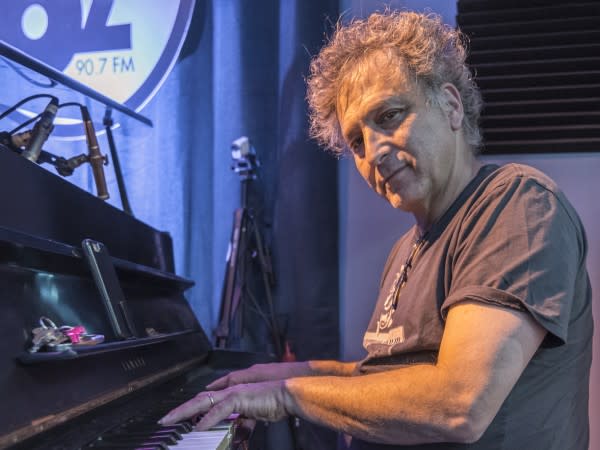
David Torkanowsky
Musician David Torkanowsky recalls the moment: 'From behind the nappy, he pulls out a .357 Magnum, puts it to his own head and announces to the audience, 'If somebody doesn't give me some cocaine right now, I'm going to fucking pull the trigger.'
At the Maple Leaf, Booker was often ignored by audiences, who would talk through his songs. Occasionally, the faithful were rewarded with a set that reminded everyone how gifted he was.
Although he backed a vast array of musicians – from Little Richard to Aretha Franklin, from Ringo Starr to the Doobie Brothers – Booker found free rein for his musical genius as a solo pianist.

James Booker with Harry Connick Jr.
'There's nobody that could even remotely come close to his playing ability,' his close friend, the pianist Harry Connick Jr, tells Keber in the Bayou Maharajah documentary. 'I've played Chopin Etudes, I've done the whole thing, but there is nothing harder than James.'"
LAST WORDS

Bayou Maharajah - extra feature -
Pianist Dr. John on James Booker

Dr. John
It was the legendary Louisiana musician, Dr. John, who memorably described James Booker as "the best black, gay, one-eyed junkie piano genius New Orleans has ever produced".

James Booker
Booker puts it best in the liner notes of his best studio release, Junco Partner (1976): “To know the feeling of rejoicing in sorrow is nothing strange to me.”
Junco Partner (1976)
New Orleans Piano Wizard: Live! (1977)
Blues and Ragtime From New Orleans (1976)
The Piano Prince of New Orleans (1976)
James Booker released five albums during his lifetime, all initially issued by European labels. Among these releases, Junco Partner (1976), New Orleans Piano Wizard: Live! (1977), and two 1976 recordings, Blues and Ragtime from New Orleans and Piano Prince from New Orleans, find him at his very best. A dozen or so albums of varying audio quality have appeared posthumously.
Around 1978 Booker stopped going on the road and began two gigs that became legendary for their length, brilliance, and erratic nature. His Tuesday night shows at the Maple Leaf Bar in the Carrollton neighborhood of New Orleans yielded two posthumous albums on Rounder Records, which are full of ranting, hellacious singing, and torrential playing despite the creaky upright piano. Booker also played regularly at the Toulouse Theater in the French Quarter as the intermission and after-show pianist for the One Mo’ Time show, the only locally produced New Orleans theater piece that went on tour to international acclaim. There are no official recordings of Booker from the Toulouse Theater, but dozens of hours of bootleg tapes have surfaced.

Our good friend Jim sez,
Join our MAILING LIST why don'cha!