ROCK & ROLLERS
DOWN ON THE DEAD END STREETS
PART 1
ROBERT JOHNSON
Over the dark years that centered around the bluesman Robert Johnson, his life had become legendary. Up above is the Devil's Moon and the spirit of Robert Johnson is on the prowl.
Over the years Robert Johnson had become a talisman of sorts wherein he was a devil with a guitar. Some folks say that Johnson was drunk, sober, moody, a woman chaser, or a wild lover.
The bastard son of Julie Ann Majors and a farm worker Noah Johnson, Robert Johnson was most probably born on May 8th 1911 in Hazelhurst, Mississippi.
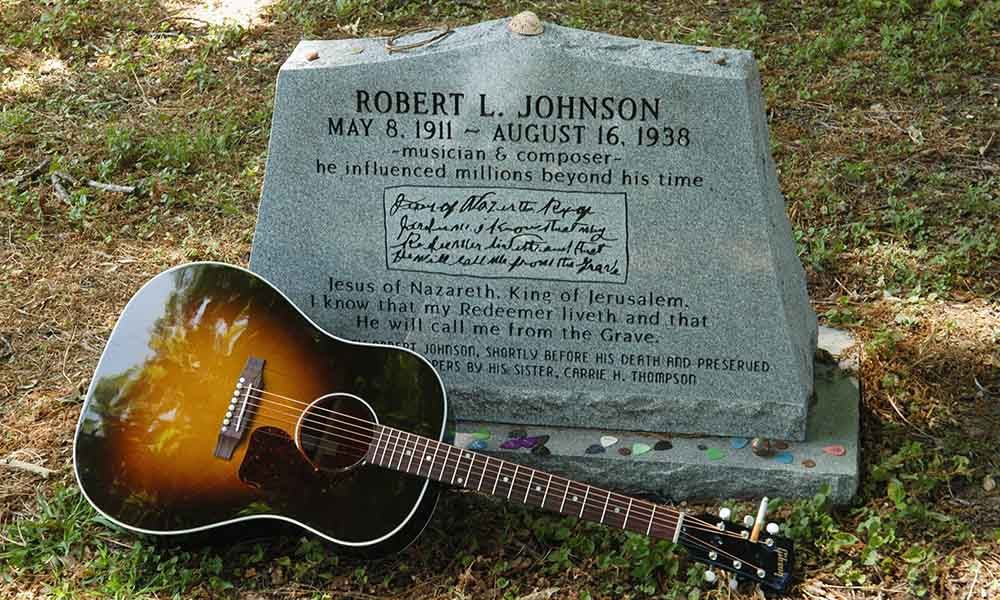
As time went on, Johnson was known for playing under several aliases and was also known to just jump up and leave places without a goodbye to anybody and everybody.
Yes indeed, some folks said Robert Johnson was a disciple of the Devil. There were plenty of rumors that were spread all over wherever he showed up. Many folks believed that Johnson was waiting for the Devil at the crossroad, armed with a black cat bone and in the end Johnson sold his soul in return for being the greatest blues guitarist in the world.
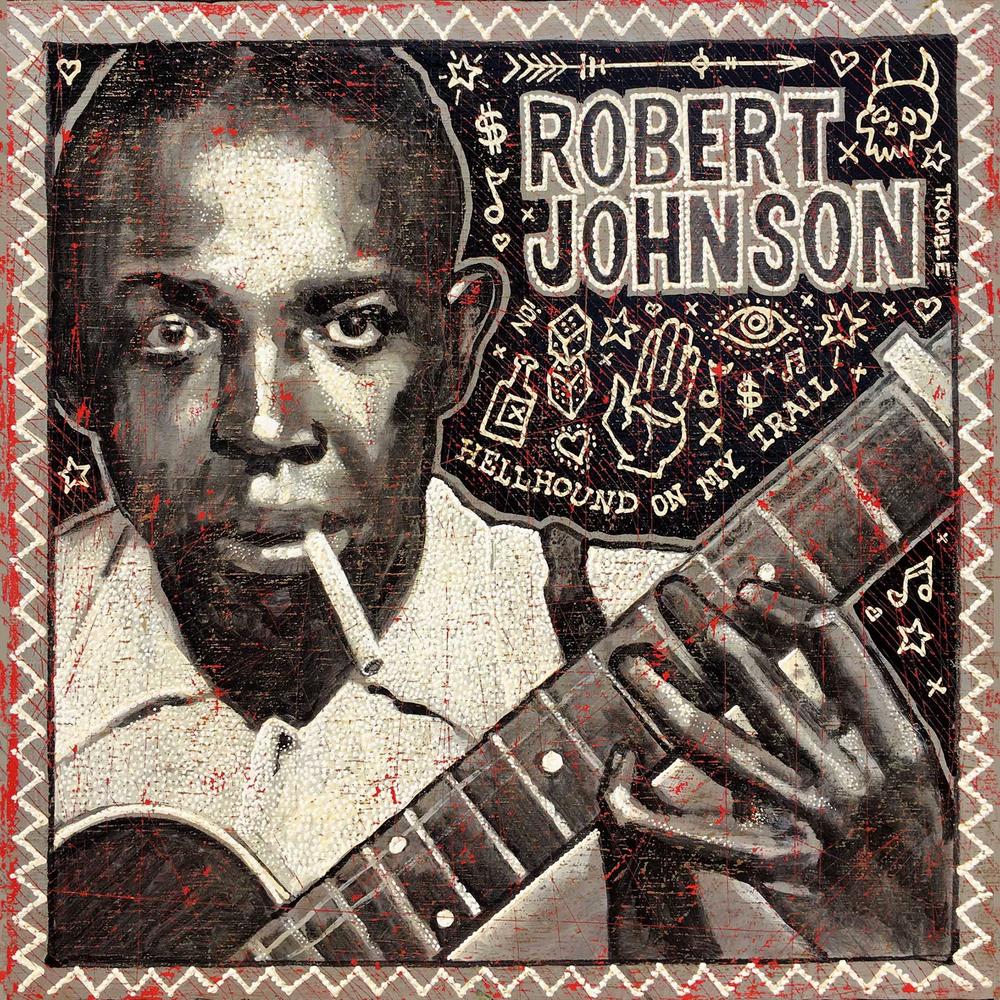
Amen!

Hank Williams
Hiram King "Hank" Williams (September 17, 1923 – January 1, 1953) was an American singer-songwriter. He is regarded as one of the most significant and influential American singers and songwriters of the 20th century.
After winning an amateur talent contest, Williams began his professional career in Montgomery in the late 1930s playing on local radio stations and at area venues such as school houses, movie theaters, and bars.
Hank Williams formed the Drifting Cowboys backup band, which was managed by his mother, and dropped out of school to devote his time to his career. Because his alcoholism made him unreliable, he was fired and rehired several times by radio station WSFA, and had trouble replacing several of his band members who were drafted during World War II.
In 1944, Williams married Audrey Sheppard, who competed with his mother to control his career. After recording Honky Tonkin' with Sterling Records, he signed a contract with MGM Records.
Hank released the hit single Move It On Over in 1947 and joined the Louisiana Hayride radio program. Within the next year, he released a cover of Lovesick Blues, which quickly reached number one on Billboard's Top Country & Western singles chart and propelled him to stardom on the Grand Ole Opry. Although unable to read or notate music to any significant degree, Hank Williams wrote many iconic hits such as Your Cheatin' Heart, Hey, Good Lookin', and I'm So Lonesome I Could Cry.
In 1952, Sheppard divorced him and he married Billie Jean Horton. Hank was dismissed by the Grand Ole Opry because of his unreliability and alcoholism.
By the end of 1952, Williams started to experience heart problems. He met Horace "Toby" Marshall in Oklahoma City, who said that he was a doctor. Marshall had been previously convicted for forgery, and had been paroled and released from the Oklahoma State Penitentiary in 1951.

Horace Raphael “Toby” Marshall
Under the name of Dr. C. W. Lemon he prescribed Williams with amphetamines, Seconal, chloral hydrate, and morphine, which made his heart problems worse.

The final days of Hank Williams
Seeking a driver, Hank first asked Brack Schuffert, but Brack couldn’t miss work at Hormel Meats. An old standby in the Driftin’ Cowboys, “Beanpole” Boling, was working at a Montgomery cab company, but he too was busy. He then went over to the Lee Street Taxi storefront and asked the owner, Dan Carr, who’d gotten him drivers before, if he could spare someone. Carr recommended his son, Charles, a thin, sandy-haired, eighteen-year-old freshman at Auburn University who was home for the holidays. He had once driven Hank, who thought Charles rode the gas pedal a little hard, but then that was how Hank himself liked to drive. So Charles Carr it was, at $400 for the four-day round-trip.
At around 11:30 a.m. Wednesday, Hank and Carr loaded up his baby blue ’52 Cadillac convertible. Hank laid his guitar on the back seat and stowed in the trunk a couple of others, along with several stage suits and other things he would need. He was wearing dark blue serge pants and jacket, a white shirt, black tie, navy blue overcoat, white felt cowboy hat, and blue suede shoes. With his pearl-handled .45 tucked in his coat pocket, Hank climbed into his accustomed travel quarters, the well-used back seat of the Caddy. As Carr pulled away, Hank told him to wait and went back in the house, changing into white cowboy boots. Still hoping the plane would be allowed to take off, he had Carr buzz by the airport, but with all flights canceled well into the day, Hank settled in, his back already hurting, for what would be hours on the road.
Before heading out of the city, though, there were some loose ends to tie up. Needing a shot of something for the road, he had Carr stop by a hotel where he’d heard there was a convention of construction contractors going on. Ambling into the ballroom where people stared, their mouths agape, he helped himself to some drinks and left. He then swung by Doc Stokes’s office. He was going to deliver Bobbie’s child, and Hank also gave him forty dollars, then asked Stokes if he could give him a shot of morphine. Stokes, smelling liquor on his breath, refused.
Hank then tried one of the doctors he’d gone to before with Toby Marshall’s card and prescriptions, and the doctor, identified in one account only as a man named Black, shot him up with morphine. Hank walked out, his legs wobbly but feeling fine. He also had several chloral hydrate tables in his pocket, after using the last prescription he had left from Toby Marshall’s stash.
Carr then made two more stops, first at a gas station to change a tire, and even the guy who changed it, Cecil Jackson, would enjoy his fame for entering the coming drama. Hank then stopped at the Hollywood Drive-In diner and bought some sandwiches, coffee, and a six-pack of Falstaff beer. Now he could leave. At around five o’clock, darkness had thrown a veil over the sky and the snow. The Caddy turned onto Highway 31 and headed northbound.
From this point on, mysteries abound that have never been solved, mysteries with plenty of clues but a lot of doubt. Some have, through the years, advanced the theory that when two porters carted Hank down to the Cadillac at around 10:45 p.m. he was already dead, although the hotel manager would offer later that Hank was still alive albeit looking “groggy.” And Carr, for his part, later noted, “If he was dead, it was a dead man walking around when we stopped later.” Hmmmm….
Over the next eight hours, as Hank sat almost silent in the convertible, which even with the heater blasting was as cold as a meat locker, nobody apparently tried to speak with or check on him, nor heard a peep from him in the back seat.
Ensuing police reports and investigations only served to sow doubt and confusion, keeping the Hank legend appropriately, and eternally, necromantic, aptly bathed in a dark, cold, pitch-black midnight.
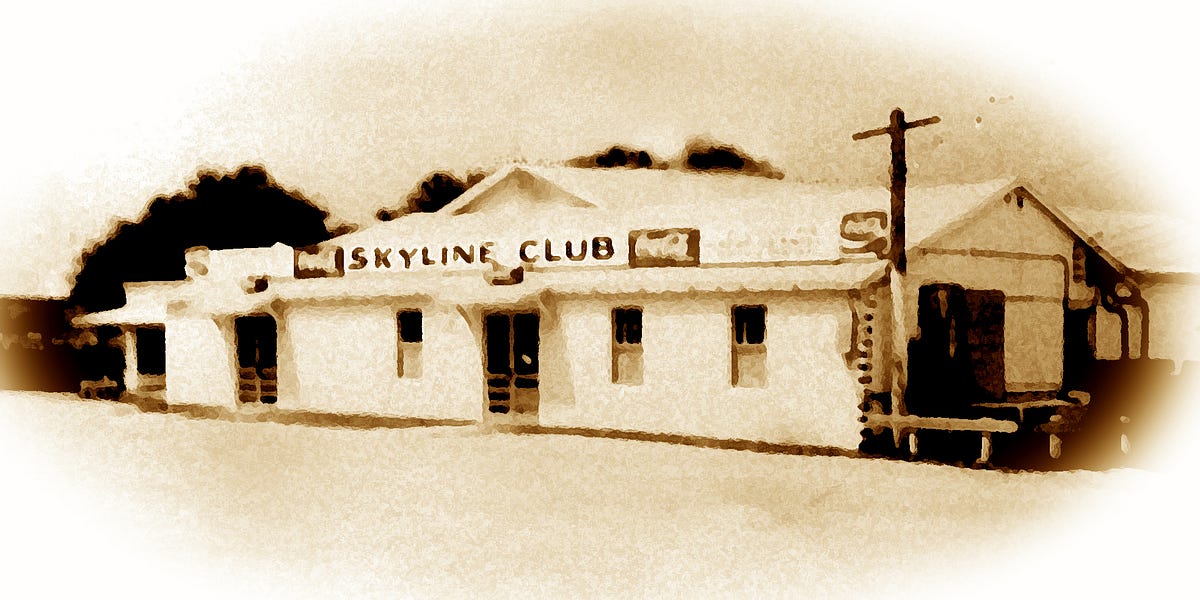
The final concert of Hank Williams 1952 tour was held in Austin, Texas, at the Skyline Club on December 19. Williams' last known public performance took place in Montgomery, on December 21, where he sang at a benefit held by the local chapter of the American Federation of Musicians for a radio announcer who had polio.
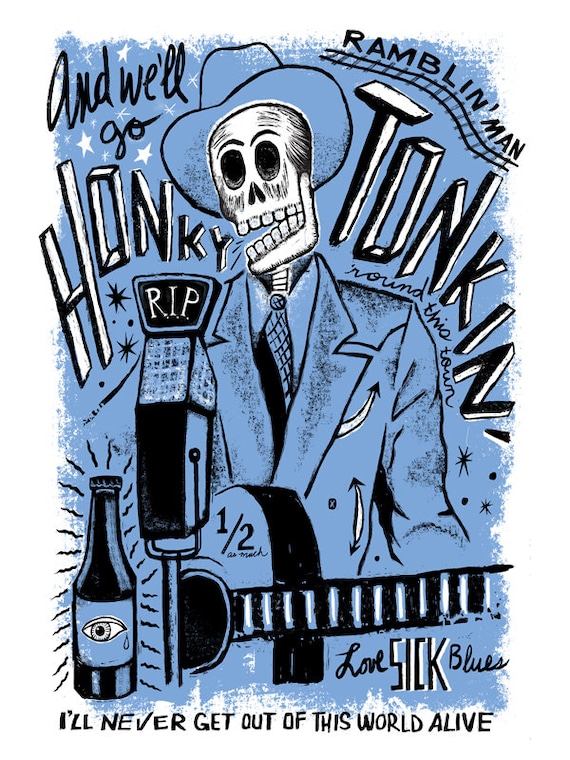
After years of back pain, alcoholism, and prescription drug abuse it severely compromised Williams' health, and at the age of 29, Williams suffered from heart failure and died unexpectedly in the back seat of a car near Oak Hill, West Virginia, while he was on route to a concert in Canton, Ohio, on New Year's Day 1953.


Felix Pappalardi
Felix Pappalardi, who many of you may remember his work with the band Mountain, began his musical career by playing bass for Greenwich Village folkie Tim Hardin, before making his name as a producer, session-player and arranger.
Pappalardi went on to produce the Youngbloods debut album as well as Disraeli Gears, Wheels Of Fire and Goodbye for the British band, Cream. Pappalardi and his wife, Gail Collins, co-wrote Strange Brew with Eric Clapton.

In 1969, Pappalardi and Leslie West formed an incredibly loud band of power-rockers under the name Mountain. The band stunned the audience at Woodstock with their power, clever licks and sheer volume.

After the demise of Mountain, Pappalardi returned to production. Despite impaired hearing (due to the loud sounds of the Mountain band), Pappalardi went to Japan in 1976 and recorded with a Japanese band called Creation.

The Dead Boys
In short time, Pappalardi threw himself with abandon in the New Wave as he ended up producing Cleveland's Dead Boys.
Although he was left unemployed, Pappalardi was far from bored: as a combination of narcotics and extramarital affairs kept him busy; along with an open marriage with lyricist Collins. The open relationship lasted until 1982, when Pappalardi fell in love with future musician Valerie Merians.
The couple's mutual affairs turned fatally ugly on April 12, 1983 when Pappalardi returned home to his Manhattan apartment after seeing Merians.

Gail Collins
In a fury, Collins shot and killed him with a handgun Pappalardi had given her as a gift. Collins then called her attorney, who advised her to call 911, which she hadn't done. When talking with police, Collins called the incident ‘an accident during a 6 a.m. firearms training session.’
Detectives discovered the ripped-up remnants of the couple's marriage certificate in the trash and understandably weren't convinced. Collins was subsequently charged with second-degree murder, later to be found guilty by a jury of criminally negligent homicide. Collins spent two years in prison before being released on parole in 1985.
The New York Daily News reported that Collins later moved to Ajijic, Mexico for ‘experimental’ treatment for cancer. Collins had been going by her middle name, Delta. Collins' landlord found her dead in her home there on December 6, 2013. Collins had left instructions for her cats to be euthanized and cremated, with their ashes to be mixed with hers.

Tom Evans & Pete Ham (Badfinger)
Although plagued by rumors that they were in fact The Beatles under an assumed name, Badfinger were just about the only continuously successful act on the Fab Four's Apple record label.

Badfinger
Badfinger were originally known as The Iveys, an artistically brilliant South Wales foursome, and changed their name in 1969 because it sounded ‘too Merseybeat’.
The band was managed by Bill Collins, a sixty year-old man who would suddenly launch himself into the world of rock & roll. Two of the three main components in Badfinger were guitarists Peter ham and guitarist-turned-bass-player Tom Evans.
After becoming the darlings of Paul McCartney and George Harrison and despite (some may say because of ) Collins' influence, the band found themselves entangled with Stan Polley, a shady American who tangled up their money so tight that the band couldn't get the money they earned.
Pete Ham
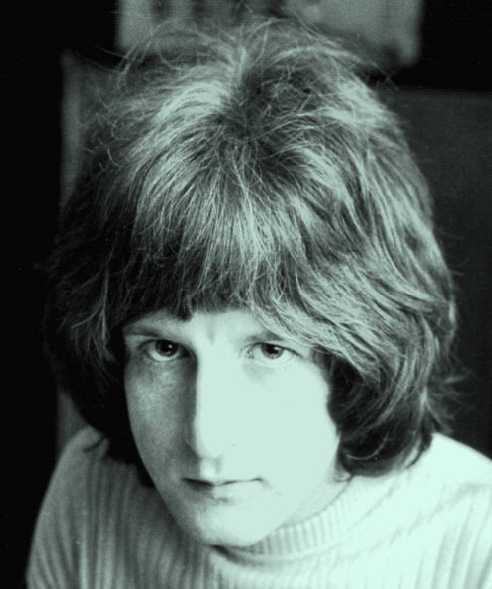
Unable to pay his mortgage, married and with another child on the way, Pete Ham hung himself in his garage-cum-studio in Weybridge on April 23 1975. A note found in a music book he'd been working on contained the PS: “Stan Polley is a soulless bastard. I will take him with me.”
For Tom Evans, the next eight years revolved around a series of disastrous reunion tours where no one got paid, bound up in threats, court cases and legal wrangling. Finally on November 17 1983, Tom Evans hanged himself from a tree in his garden. He left no note, but regulars at his local pub planted a tree in his memory.

PHIL OCHS
Phil Ochs was one of the best and most original singer-songwriters of the 1960's. Phil ended up moving to New York City in 1961 where he became, together with Joan Baez and Bob Dylan, a leading light of the ‘protest folk’ movement.
While the young Bob Zimmerman discovered electricity and a drum kit early on, Ochs stayed close to his roots. At one point Phil Ochs stated that “I want to be known as the first left wing star.”
Although Phil Ochs was well regarded he was known little more than a cult figure during his life.
Ochs ironic sense of humor is demonstrated by the title of his 1970 Greatest Hists ("fifty Phil Ochs fans can't be wrong") album, not a greatest hits collection at all, but a set of new song that featured side-players featuring Ry Cooder, members of The Byrds and James Burton.
In 1971, Ochs exiled himself from the USA and travelled around Europe and Africa. He spent time in London and worked for awhile at Time Out magazine, before being mysteriously set upon in Africa. This attack left him badly scarred, with irreparably damaged vocal chords.
A harsh self critic before the incident, he became doubly so afterwards. Homesick for a country he disliked, Ochs returned to the USA, where he found the political situation intolerable.

Phil Ochs & Bob Dylan
The Chile Benefit 1974
Phil Ochs continued to work as political activist and quickly recorded a scathing single called “Here's To The State of Richard Nixon”.
While Ochs continued performing he was beginning to look for solutions in the bottom of a glass and he eventually drifted into schizophrenia.
Towards the end Ochs refused to answer his own name and rechristened himself “John Butler Train”. On April 9th 1976, Phil Ochs dead body was discovered hanging in his sister's apartment at Far Rockaway, New York.