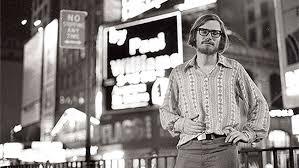

Paul S. Williams (May 19, 1948 – March 27, 2013) was an American music journalist, writer, and publisher who created Crawdaddy! the first national US magazine of rock music criticism, in January 1966. He was a leading authority regarding the works of musicians Bob Dylan, Brian Wilson, and Neil Young,
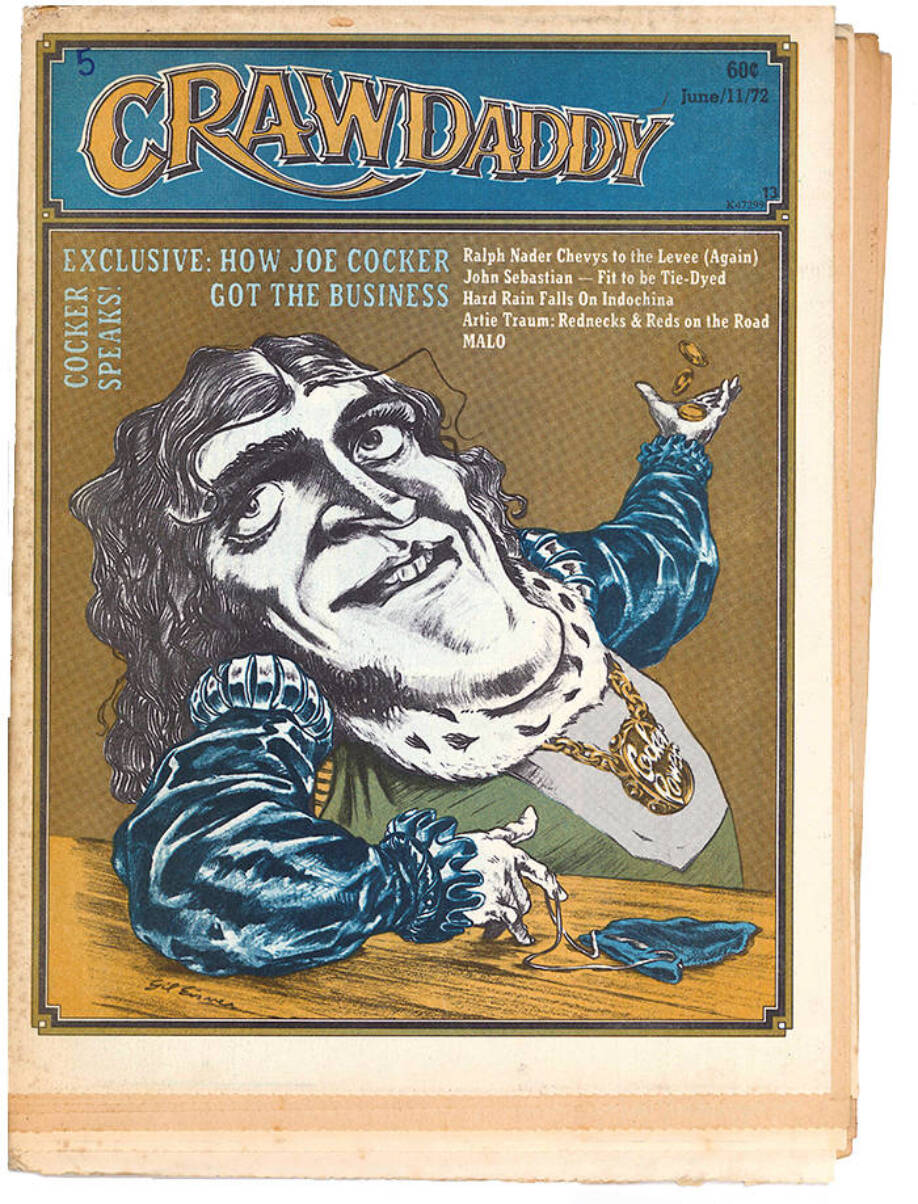
Paul Williams — the writer and editor who helped create what we now know as rock journalism with Crawdaddy!, a magazine he founded in 1966 — died last night at the age of 64 from complications related to a bike accident in 1995.
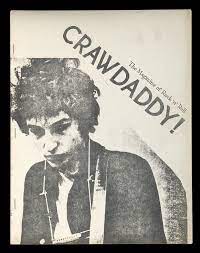
While briefly enrolled at Swarthmore College, Williams created Crawdaddy!, the first national US magazine of rock music criticism, in January 1966 with the help of some of his fellow science fiction fans (he had previously produced science fiction fanzines). His aim was to reflect the sophistication brought to pop music by two albums released in 1965: Bob Dylan's Bringing It All Back Home and the Beatles' Rubber Soul. The first issue was ten mimeographed pages written entirely by Williams. In that issue, he declared that Crawdaddy! would include "neither pin-ups nor news-briefs" and that "the specialty of this magazine is intelligent writing about pop ..."
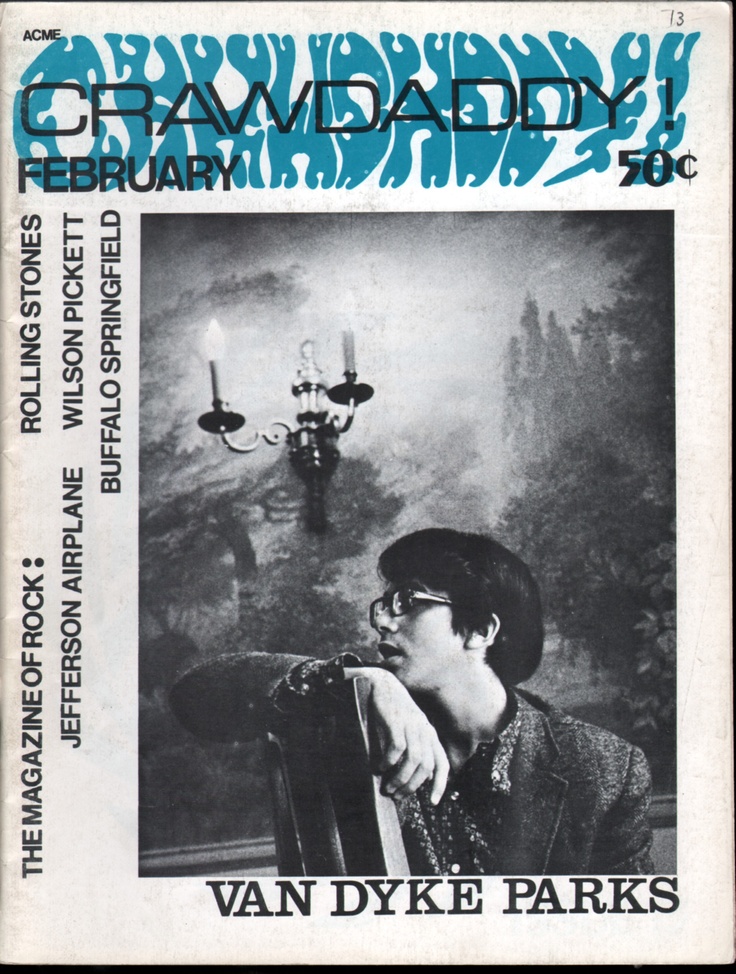
Williams began publishing Crawdaddy! at the age of 17, following his earlier work publishing science fiction fanzines — as Johan Kugelberg stresses on Williams’ website, “science-fiction fandom roots… all rock fanzines and of rock fandom” — continuing for two years, printing the early work of influential writers such as Sandy Pearlman and Jon Landau; the former would go on to produce The Clash’s Give ‘Em Enough Rope, while the latter of whom would go on to manage and produce Bruce Springsteen. In its two-to-three-year run (as Williams described it), the magazine’s distribution went from 500 copies to 25,000 and could count among its fans Paul Simon and Bob Dylan.
Following the initial success of Crawdaddy!, Williams closed up shop in New York, moving to Mendocino, California where he traveled with Timothy Leary and “ended up at John and Yoko’s Bed-In for Peace in Montreal.”
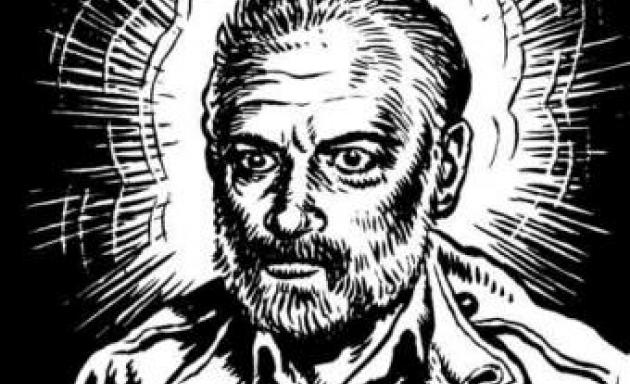
Philip K. Dick
It was also around this time that Williams struck up a friendship with the influential science fiction author Philip K. Dick, a relationship that continued after Dick’s death, when Williams was named his literary executor. Williams is often credited with securing Dick’s literary legacy and influence through the position.

Paul Williams eventually left the magazine in 1968 and reclaimed the title in 1993, but had to end it in 2003 due to financial difficulties.
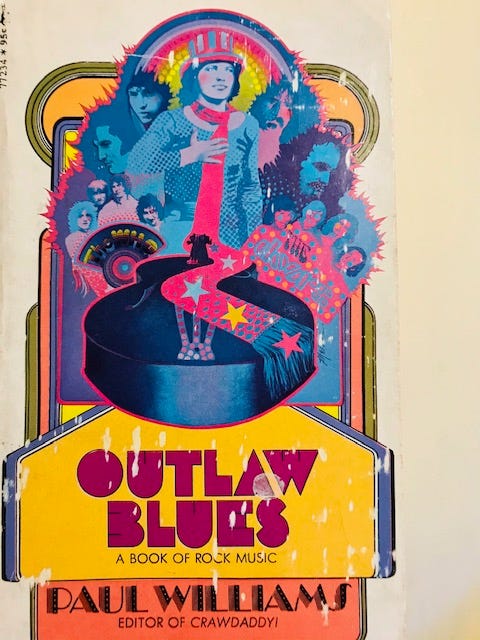
Williams was the author of more than 25 books, of which the best-known are Outlaw Blues, Das Energi, and Bob Dylan: Performing Artist, the acclaimed three-part series.
In 1981, Paul Williams edited and published, with David G. Hartwell, the first book edition of The Universal Declaration of Human Rights, with a foreword by Jimmy Carter. Williams also made significant contributions to Hartwell's book-length analysis of science fiction, Age of Wonders: Exploring the World of Science Fiction, and Hartwell mentions Paul Williams prominently in the book's acknowledgments.

Paul Williams
Here's a portion of
What the Sixties Had That The Eighties Don't Have
"After a seventies sabbatical from the demands of rock criticism, Paul Williams rediscovered rock & roll in the eighties formed the basis of the best ‘rock’ tome this side of Lester Bangs…In this excerpt, Williams contrasts the Third Decade of Rock with its formative days – the sixties.
What the sixties had that the eighties don't have is an illusion of community. Despite the quality, the richness, the variety of rock & roll today, especially live rock & roll, this absence is sorely felt. There is something incomplete about even the best live shows. The prevalence of people wearing t-shirts with bands' names on them seems to me not so much a proclamation of identity as a plea for it. We hear ourselves in the music but when we look around we can't see ourselves in the crowd.
This loneliness is felt by the musicians as well. They can express their hearts and shout the truth so it bounces off the farthest walls, but what's missing is something bigger to be in service too. Some have found it for themselves but only a very few – U2's Bono comes to mind – project a conviction that their audience is finding it too. I suppose Springsteen projected it and that's a big part of why he became so hugely popular. But the hunger he sensed and expressed has turned on him, I fear, so that regardless of his wishes in the matter he is now identified as the nourishment rather than the need. It's like you get out in front of the stampede and suddenly every one thinks that maybe you are the mysterious IT we've all been running after. Express the hunger and we'll make you king; become the king and we'll eat you alive and complain that there wasn't more meat on your bones.
For a few brief years in the sixties there was something like a collective illusion, a sense of working together in service to a real and imminent grater truth. We believed we were building something. That feeling was so satisfying that even today musicians and fans alike listen to the music that was made then and bemoan the loss of the intangible Something that made it all so special once. Why can't it be like that today?
The sad answer is, because the bubble burst, the magical sense of community came to naught and blew away, and it's hard to put an illusion back together again. The illusion of the sixties was one of social transformation, a birth of a new community from the ashes of the corrupt old order. The illusion was based on a very substantial (and, in hindsight, accurate) feeling of change taking place, old assumptions and old ways dying and new ways being born.
This did in fact occur, in many public and private realms of human perception and endeavor. But what failed to occur was the perpetuation of a sense of community and common purpose among those committed to ongoing transformation, revolution, personal and societal growth and change. The hippies, the peaceniks, the rock & rollers, the underground and the counterculture and their alternative media and lifestyles were all integrated back into the mainstream of society and although the changes we spearheaded had a lasting impact, and touched more people than ever, the thrill of discovery, leadership an danger was gone.
The sense of belonging to a tribe of great adventurers, caught up in the momentum of a historic time of change, disappeared; and here we are belonging to nothing but society as a whole with all its inertia and corruption and purposelessness again.
Rock & Roll became an institution, big business, it even took on a sort of bread-and-circuses quality, a diversion to keep youthful, revolutionary energy inside the stadiums and off the streets. Rock & Roll stars by their actions promoted the use of alcohol, cocaine, heroin and other spiritually debilitating drugs…
Punk came along in the mid--late seventies as a response to this, a revolution within the rock & roll ranks, and in many ways it was a successful revolution, the fruits of which are still with us today…
The music is exciting again, there's a lot of different things happening and a plunge into the world of rock & roll in the mid--late eighties can be extremely stimulating and rewarding…"

Paul Williams' final published books were The 20th Century's Greatest Hits (a "Top 40" list that includes movies, books & other documents) (2000) and the last volume of his critical look at the music of Bob Dylan — Bob Dylan: Mind Out of Time (Performing Artist Vol. 3, 1987-2000) (2004).

I was just a high school kid in Carlisle PA when my brother Rob handed me a Crawdaddy magazine and my life was never the same.

ROCK & ROLL IS STILL ALIVE!