FACES IN THE CROWD: LESTER BANGS
Leslie Conway "Lester" Bangs (December 14, 1948 – April 30, 1982) was an American music journalist and critic. He wrote for Creem and Rolling Stone magazines and was also a performing musician.

Bangs was born in Escondido, California. He was the son of Norma Belle (née Clifton) and Conway Leslie Bangs, a truck driver. Both of his parents were from Texas: his father from Enloe and his mother from Pecos County. Norma Belle was a devout Jehovah's Witness. Conway died in a fire when his son was young. When Bangs was 11, he moved with his mother to El Cajon, also in San Diego County.
Lester's early interests and influences ranged from the Beat Generation (particularly William S. Burroughs) and jazz musicians John Coltrane and Miles Davis, to comic books and science fiction. Lester met Cameron Crowe while they were both contributing music pieces to The San Diego Door, an underground newspaper of the late 1960s.

Lester Bangs became a freelance writer in 1969, after reading an ad in Rolling Stone soliciting readers' reviews. His first accepted piece was a negative review of the MC5 album Kick Out the Jams, which he sent to Rolling Stone with a note requesting, if the magazine were to decline to publish the review, that he be given a reason for the decision; no reply was forthcoming, as the magazine did indeed publish the review.
Lester's 1970 review of Black Sabbath's first album in Rolling Stone was scathing, rating them as imitators of the band Cream: Cream clichés that sound like the musicians learned them out of a book, grinding on and on with dogged persistence. Vocals are sparse, most of the album being filled with plodding bass lines over which the lead guitar dribbles wooden Clapton-isms from the master's tired Cream days. Cream even have discordant jams with bass and guitar reeling like velocitized speed-freaks all over each other's musical perimeters yet never quite finding synch—just like Cream! But worse.
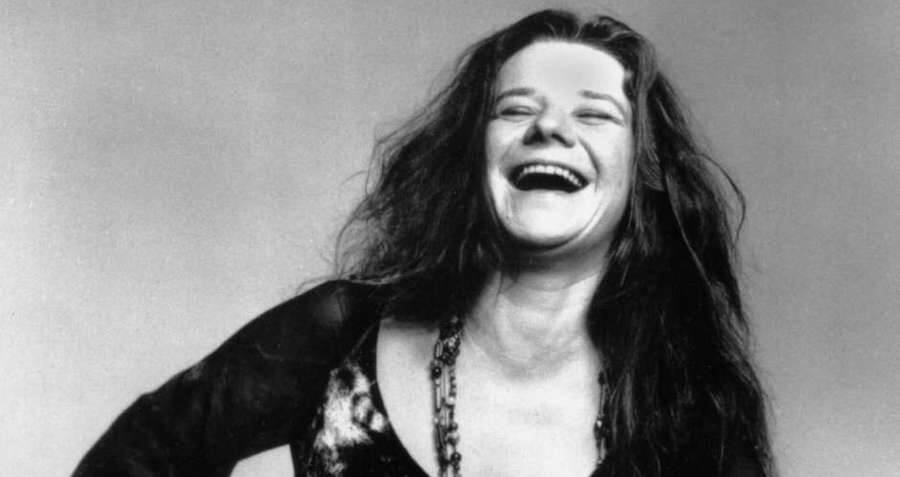
Bangs wrote about the death of Janis Joplin in 1970 from a drug overdose: “It's not just that this kind of early death has become a fact of life that has become disturbing, but that it's been accepted as a given so quickly.”
In 1973, Jann Wenner fired Bangs from Rolling Stone for "disrespecting musicians" after a particularly harsh review of the group Canned Heat.

For me it all began during my high school years when I came across Lester Bangs & Cream Magazine during my high school years. My love of Lester's way of embracing rock & roll is still with me…always!
If you follow the myth of Lester Bangs, his talent remains standing. The bod of rock journalism that Lester Bangs amassed in his short life underscored some of the most important lessons concerning rock & roll music.

I have always found Lester's work to be beyond the average type of rock & roll.

“Art, Bob and Rock & Roll and whatever is all just a joke and a mistake, just a hunka foolishness so stop treating it with any seriousness or respect at all and just recognize the fact that it's nothing but a wham-o toy to bash around as you please in the nursery…don't worry about the fact that it's a joke and a mistake and a bunch of foolishness as if that's gonna cause people to disregard it and do it in or let it dry up and die, because it is the strongest most virulent, most invincible Super-joke in history, nothing could ever destroy it ever, and the reason for that is precisely that it is a joke, a mistake, foolishness. The first mistake of art is to assume that it's serious.” – Lester Bangs, Psychotic Reactions and Carburetor Dung

During my rock & roll years, I quickly became a fanatic of Lester's work in Creem magazine which still stands as the greatest rock & roll magazine of all time.

As fast as I could I would run to the local pharmacy that carried rock magazines, as I would get the next addition of Creem. The main thing for me was Lester's works in Creem Magazine…and Lester's pieces that he would write would always knock me out as he would always take me on a wild ride that reflected a new twist on rock journalism.
In 2012 New Yorker Magazine had done a profile, Lester Bangs: Truth Teller, explained how Lester's family background influenced the development of his unique writing style: “Lester Bangs was born in 1948 and was grown up in El Cajon, California, had been driven away into a strange world by a complicated, shambolic family…The community of Bangs and his family belonged to believe in an end-is-nigh ideology, and they disapproved of Christmas presents, birthday parties, and education beyond reading the Bible. Here is the root, perhaps, of the seductive ease and fluidity with which Bangs embraced the culture high and low.”
Later on in his career, Lester surprised a lot of folks as he started up a couple of his own bands and actually released a few records…
Birdland
Jook Savages On The Brazos
Lester's reasoning behind all this seemed to be “How can I criticize something I haven't done myself!" While Lester's brief tenure as a musician failed to answer any of his own big questions about artistry in general, Lester continued to question the sounds that seeped out of his stereo speakers until he shuffled off to his mortal coil back in 1982.

Lester Bangs
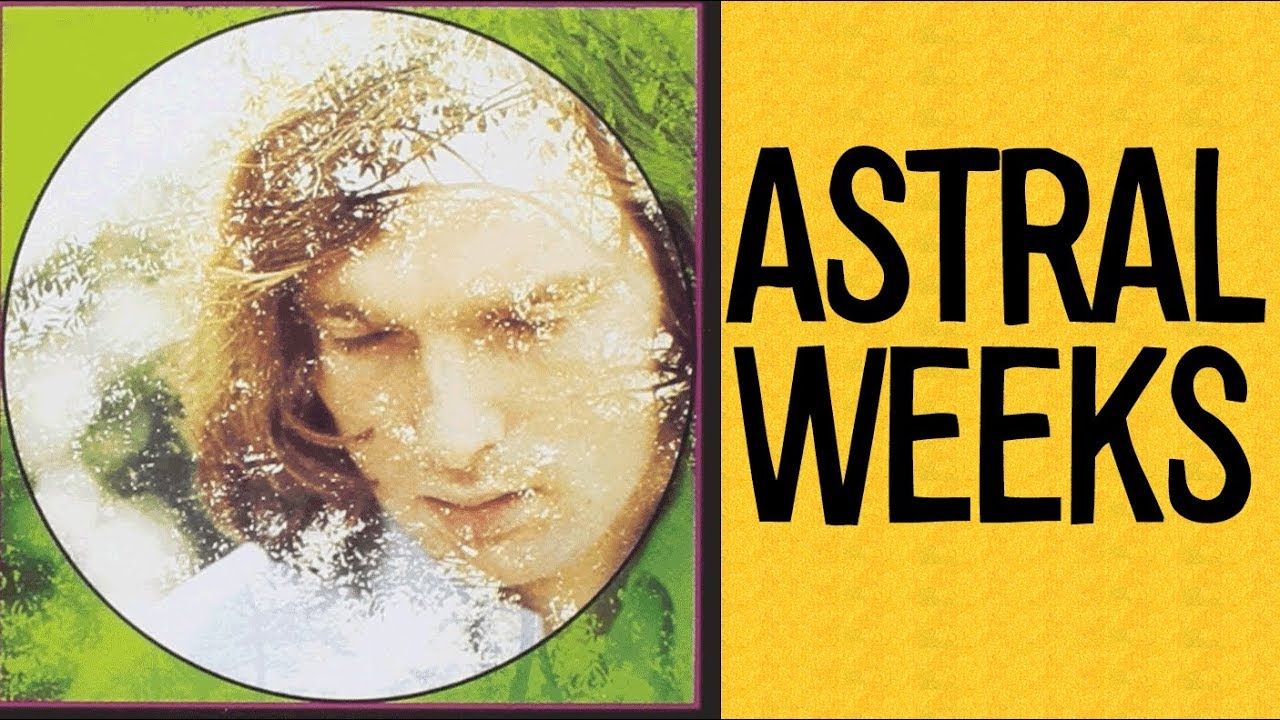
Astral Weeks by Lester Bangs
from “Stranded” (1979)
"Van Morrison’s Astral Weeks was released ten years, almost to the day, before this was written. It was particularly important to me because the fall of 1968 was such a terrible time: I was a physical and mental wreck, nerves shredded and ghosts and spiders looming and squatting across the mind. My social contacts had dwindled to almost none; the presence of other people made me nervous and paranoid. I spent endless days and nights sunk in an armchair in my bedroom, reading magazines, watching TV, listening to records, staring into space. I had no idea how to improve the situation and probably wouldn’t have done anything about it if I had.
Astral Weeks would be the subject of this piece – i.e., the rock record with the most significance in my life so far – no matter how I’d been feeling when it came out. But in the condition I was in, it assumed at the time the quality of a beacon, a light on the far shores of the murk; what’s more, it was proof that there was something left to express artistically besides nihilism and destruction. (My other big record of the day was White Light/White Heat.) It sounded like the man who made Astral Weeks was in terrible pain, pain most of Van Morrison’s previous works had only suggested; but like the later albums by the Velvet Underground, there was a redemptive element in the blackness, ultimate compassion for the suffering of others, and a swath of pure beauty and mystical awe that cut right through the heart of the work
I don’t really know how significant it might be that many others have reported variants on my initial encounter with Astral Weeks. I don’t think there’s anything guiding it to people enduring dark periods. It did come out at a time when a lot of things that a lot of people cared about passionately were beginning to disintegrate, and when the self-destructive undertow that always accompanied the great sixties party had an awful lot of ankles firmly in its maw and was pulling straight down. so, as timeless as it finally is, perhaps Astral Weeks was also the product of an era. Better think that than ask just what sort of Irish church webbed haunts Van Morrison might be a product of."

LOU REED & LESTER BANGS
You walk into the dining room of the Holiday Inn filled with expectation at finally getting to meet one of the musical and psychological frontiersmen of our time. Lou Reed, who with his group the Velvet Underground was singing about dragqueens and heroin at least five years before such obsessions reached the mass level. Who began a comeback as a solo artist last summer in England, and under the wing of David Bowie produced Transformer, a classic of mondo bendo rock. Who then, having come out of the closet at last, returned to his New York home and ushered in 1973 by getting married to an actress cum cocktail waitress named Betty (stage name Krista) Kronstadt.
On top of all that, both Transformer and the single from it are enormous hits. Lou Reed is not only a legend: he’s a star. In one of the interviews he did last summer, Lou said: “I can create a vibe without saying anything, just by being in the room.”

A blend of bumptious challenge and devoted audition typify many of Bangs’ encounters with ‘70s alpha dogs. When Lou Reed put his songwriting through left-turns, drag, and feedback in the 1970s, Bangs stalked him, literally and figuratively. After a concert during Reed’s 1973 tour, Bangs followed Reed to a hotel to play Little Red Interviewer on the Shoulder: “Isn’t David Bowie a no-talent asshole? Why don’t you shoot speed any more?”
Reed is too drunk to fight Lester off, but Bangs doesn’t want revenge. He thinks Reed wants his audience to feel sorry for him, and this drives Bangs crazy. He’s disappointed. He wants to BELIEVE Lou Reed is better than mere theater, even if no one else does. Like most Bangs, it’s a great read but the writing is removed from the music.

Bangs is more effective on Lou a few years later, writing about Reed’s double-LP recording of manipulated feedback, Metal Machine Music, one of three separate times Bangs wrote about the album during 1975 and 1976. The review included here is the shortest; it’s simply a list of six theories, among them “Lou plays amplifier as well as he plays guitar,” the album “is what it sounds like in Lou’s circulatory system,” and that MMM is a “death wish being fulfilled before our eyes, corporately.” The piece is short enough to fit in even today’s attenuated lifestyles magazines and yet it’s unapologetically intellectual despite—or precisely because of—Lester’s fierce vernacular.

Considering several of Miles Davis’ mid-1970s electric jazz records as a unified body of work in 1976, Bangs goes slightly mad, vowing to find the “cancer” running through the records. Watching Bangs try to read Davis’ mind and see into his soul is fun, but the music withers underneath all the hand-wringing. Bangs concludes that Davis’ music is some kind of compressed, black jewel and throws his wrung hands up. Five years later and several degrees cooler, Bangs has put down his hymnal and heard the music. He calls Davis’$2 1972 album On the Corner “the first jazz of the Eighties,” an “environment” record built from “rhythm and attitude.” History’s upheld the second verdict.
HERE'S THE BEST LESTER BANGS BOOK

Since Lester passed away, he had become a folk hero. For all of you who want to learn more about Lester's work there is an excellent book called Psychotic Reactions & Carburetor Dung (By Lester Bangs; Edited by Greil Marcus by Vintage Books)
My favorite episode on Psychotic Reactions & Carburetor Dung is a piece which featured a deceased Jimi Hendrix in heaven. I can remember that when this piece was released it freaked out a lot of folks because Hendrix was a deity.
Over the years there have been even more books based on Lester Bangs unique way to think of things that embrace the essence of Rock & Roll.
LESTER BANGS QUOTES:
“The only true currency in this bankrupt world is what you share with someone else when you're uncool.”
“Don't ask me why I obsessively look to rock & Roll bands for some kind of model for a better society. I guess it's just that I glimpsed something beautiful in a flashbulb moment once, and perhaps mistaking it for prophecy have been seeking its fulfillment ever since.”