Buffalo Springfield was a rock band who were formed in Los Angeles by Canadian musicians Neil Young, Bruce Palmer and Dewey Martin along with two American musicians Stephen Stills and Richie Furay.
Buffalo Springfield released three albums and several singles from 1966 to 1968. Their music combined elements of folk music and country music with British Invasion and Psychedelic Rock influences.
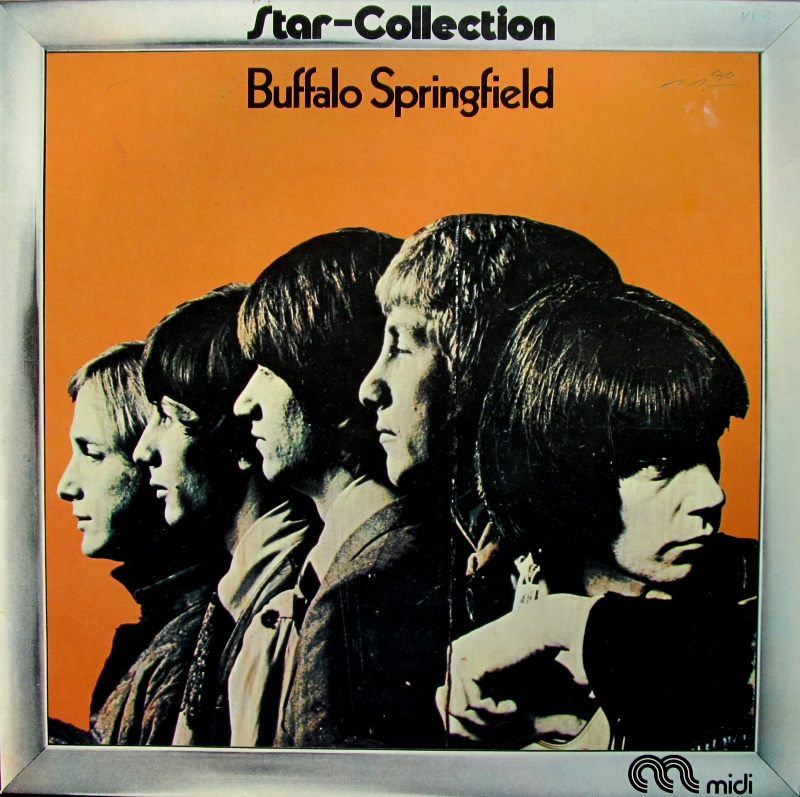
The lifespan of a popular music group is often measured in terms of records, not years, along with the groups that have either disappeared in the past half year, or been through so many personnel changes as not to be recognized. Ironically the name of the band, Buffalo Springfield, came from a steamroller.
Los Angeles, March 1966…There was a 1953 Pontiac hearse with Canadian plates rolling down Sunset Boulevard, back windows curtained for hiding instruments. Neil Young was behind the wheel. Stuck in a traffic jam Stephen Stills saw a van coming. Neil moved the hearse to follow the van to Frazier Mohawk's house where all the players took out their guitars and started playing.
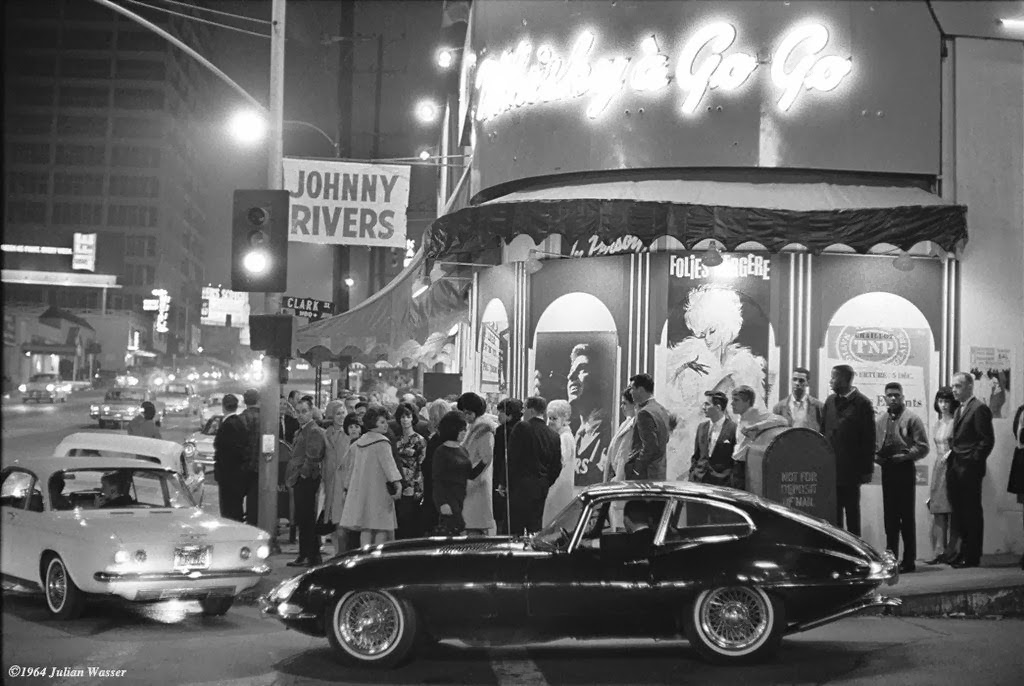
Chris Hillman of The Byrds asked Elmer Valentine, one of the owners of the Whiskey A Go Go about getting Buffalo Springfield booked into the Whiskey. In short order the Buffalo Springfield went into the Whiskey as the second group for six weeks.
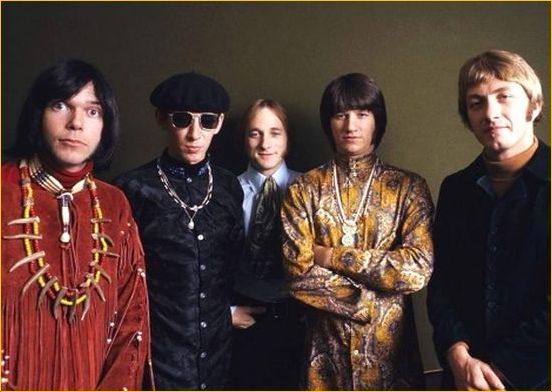
The Buffalo Springfield were tearing up the crowds at the Whiskey A Go Go. Everybody in town was coming to hear the Buffalo Springfield. In three weeks, Richie had turned into a fireball. Richie would bounce from one end of the stage to the other on his tiptoes backward and he would be playing and screaming and it meant something. It was his stage presence that would develop the Buffalo Springfield technique of splitting from the microphone the minute the verses were over and hitting the microphone just as the words were starting again.
The rest of the time being nowhere near the microphones which was characteristic of the band on stage. For six weeks Buffalo Springfield played five short sets a night, sharing the bill with bands like Them, Love, and The Doors.
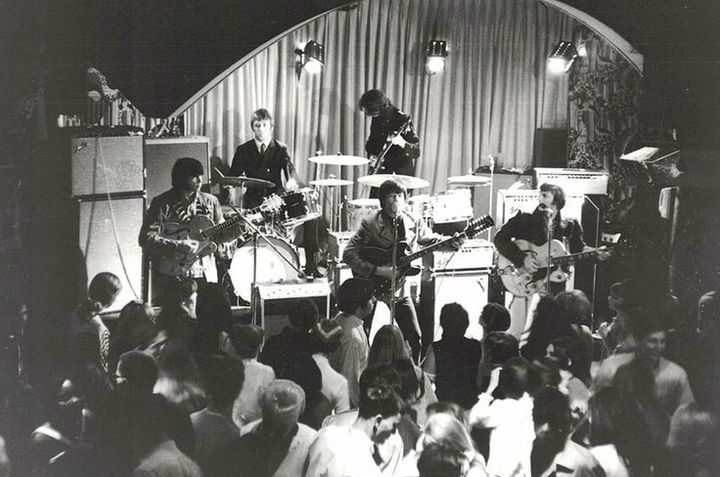
Richie Furay says “Those Whisky shows were as good as we ever were!”
The Springfield's on-stage guitar duels were big attractions…Neil Young at one end of the stage, Stills at the other. Neil “the Indian” wearing the fringed jacket he spent this first Whiskey paycheck on; Stills in a cowboy Stetson,
Richie Furay was center-stage when he was not running up and down. Furay remembers that “No one knew who we were when we started but at the end of our six-week run there were lots and lots of people lining up and wanting to get in.”

Bruce Palmer
Bruce Palmer was a real star, he was well known for playing the most incredible bass that has ever been heard. Palmer worked his magic with a warped neck, bad pickups, only one knob that worked and four bottom E guitar strings; all tuned low, everything on the amp turned to bass. Bruce was incredible!

Stephen Stills & Neil Young
The plan was to record six songs by Stills and six by Young. The fly in the ointment was the production. Stills and Young agreed that it failed to capture the energy, intensity and brilliance of the band's on-stage sound.
Earlier, Buffalo Springfield had made a live demo of a set at the Whiskey which sounded infinitely better. Neil Young still talks about that demo. Still says “It had a spirit to it that was all its own, that was never replicated.”

Buffalo Springfield released their second single For What It's Worth (Stop, Hey What's that Sound) which ended up being the band's a big hit!
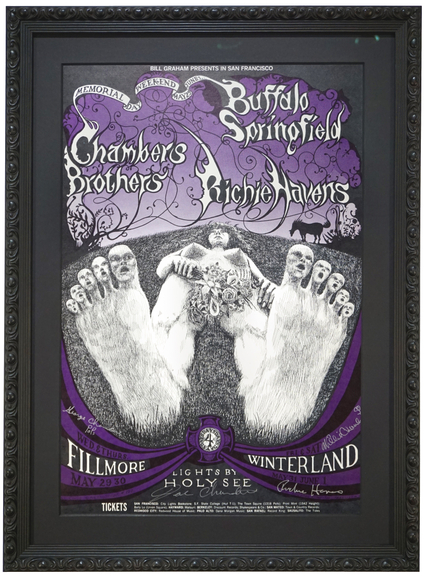
All of their 1966 concert appearances took place in California, except for a pair of shows in New York City on Dec. 30-31. The band toured almost constantly in 1967, mostly in California, but with dates in Texas and New Mexico in early-February and the Pacific Northwest in late-March.
Then, for three months in the late-spring and summer of 1967, the band toured the Midwest. That leg of the tour got off to an inauspicious start on May 5 at Western Illinois University’s Morgan Gym. After their equipment arrived late from Chicago, the band played an abbreviated set.
Six dates followed, all second-billed behind the Turtles. Those dates were May 5 at the Swinging Gate club in Fort Wayne, Ind.; May 6 at the KRNT Theatre in Des Moines, Iowa; two shows on May 7 at the Masonic Temple in Davenport, Iowa; May 9 at the Crimson Cougar club in Aurora, Ill. (two miles south of Aurora on Illinois Highway 25 and burned down five months later); May 10th at the DuPage County Fairgrounds Arena in Wheaton, Illinois; and May 12 at Central High School in Hinsdale, Illinois.

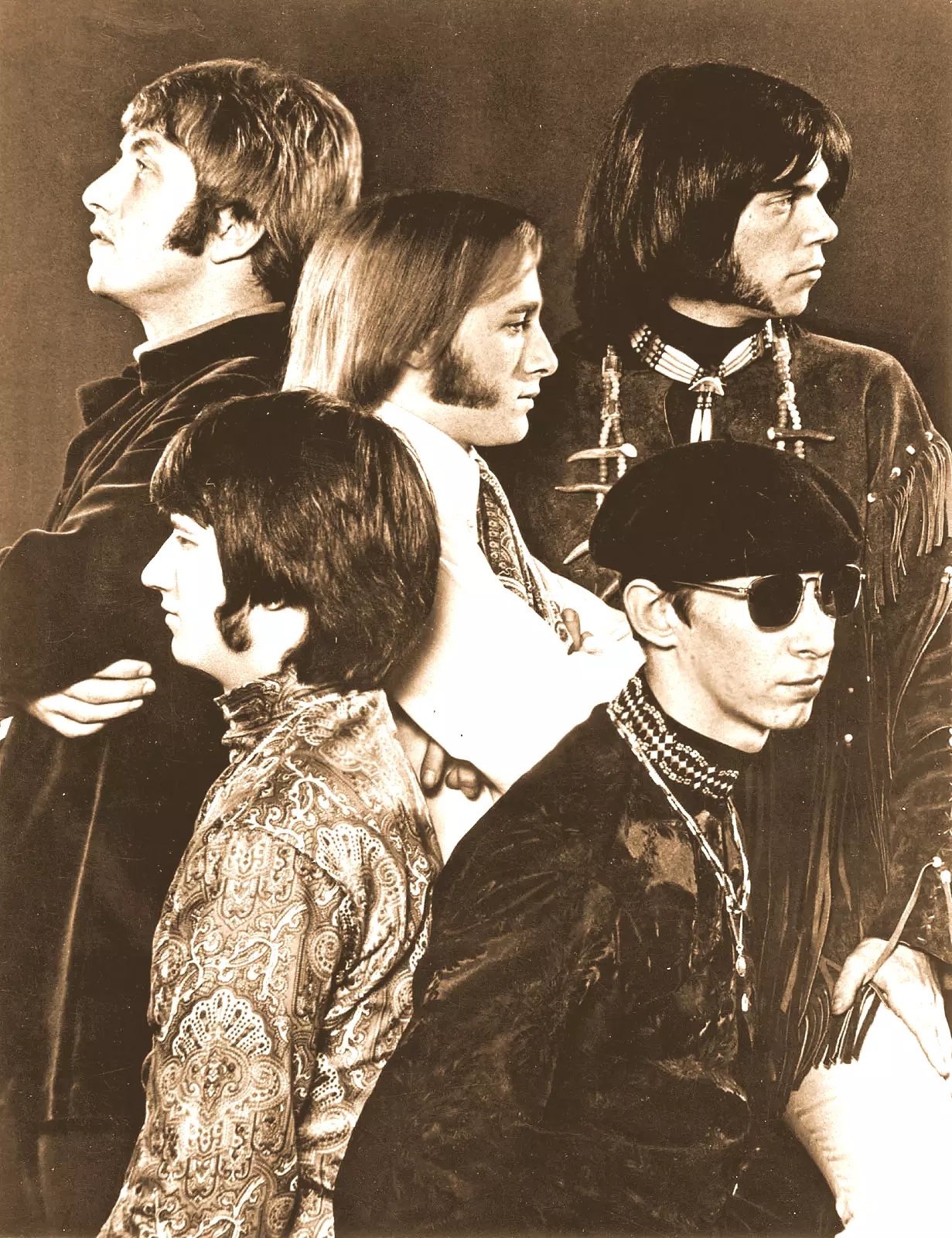
After awhile, Neil Young returned in August and the band severed ties with Greene and Stone and then they divided their time between playing gigs, and finalizing the second album, titled Buffalo Springfield Again.
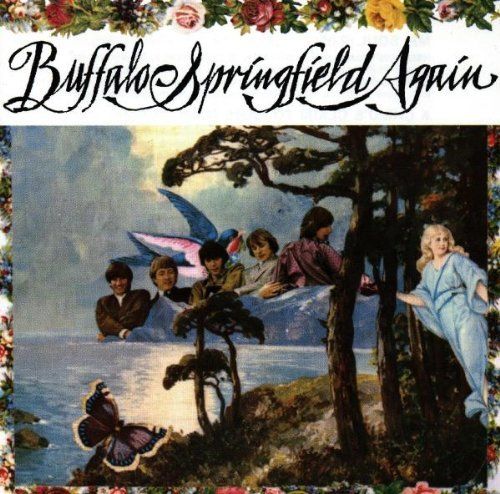
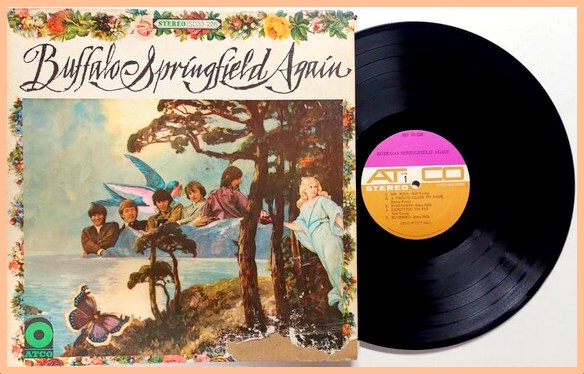
The famous album cover of one of the greatest rock albums, Buffalo Springfield Again, by LA writer/artist Eve Babitz. From left to right, floating over the Pacific, are Richie Furay, Dewey Martin, Neil Young, Stephen Stills, Bruce Palmer, and an angel.
The band's second album, Buffalo Springfield Again, marked their progression to psychedelia and hard rock and featured tasty songs such as Bluebird, Mr. Soul and Rock & Roll Woman! The second album, titled Buffalo Springfield Again was produced by Ertegun.
Buffalo Springfield Again features the first recordings of songs written by guitarist Richie Furay, who had not contributed any material to the band's debut album. Also unlike the previous record, which had been recorded in its entirety by the band proper, session musicians appeared on various tracks as indicated on the album's inner sleeve. Palmer's deportation problems necessitated the contributions of outside bass players. During one of the times that Young had left the band, he had booked a studio to record Expecting to Fly, with session musicians under the impression it was for a Neil Young solo project rather than for Buffalo Springfield.
The album includes an early country rock track by Furay, A Child's Claim to Fame. The track Rock & Roll Woman allegedly includes vocals by Crosby, who also allegedly had a hand in its composition; whether true or not, Stills acknowledges the genesis of the song was from jamming with Crosby.
Session musicians
Russ Titelman – guitar on "Expecting to Fly"
Doug Hastings – guitar on "Rock & Roll Woman"
Chris Sarns – guitar on "Broken Arrow"
James Burton – Dobro on "A Child's Claim to Fame"
Charlie Chin – banjo on "Bluebird"
Jack Nitzsche – electric piano on "Expecting to Fly"
Don Randi – organ on "Broken Arrow", piano on "Expecting to Fly" and "Broken Arrow", harpsichord on "Expecting to Fly"
Jim Fielder – bass guitar on "Everydays"
Bobby West – bass guitar on "Bluebird"
Carol Kaye – bass guitar on "Expecting to Fly"
Harvey Newmark – bass guitar on jazz theme of "Broken Arrow"
Jim Gordon – drums, vibes, timpani on "Expecting to Fly"
Hal Blaine – drums on jazz theme of "Broken Arrow"
Jim Horn – clarinet on jazz theme of "Broken Arrow"
The American Soul Train – horns on "Good Time Boy"
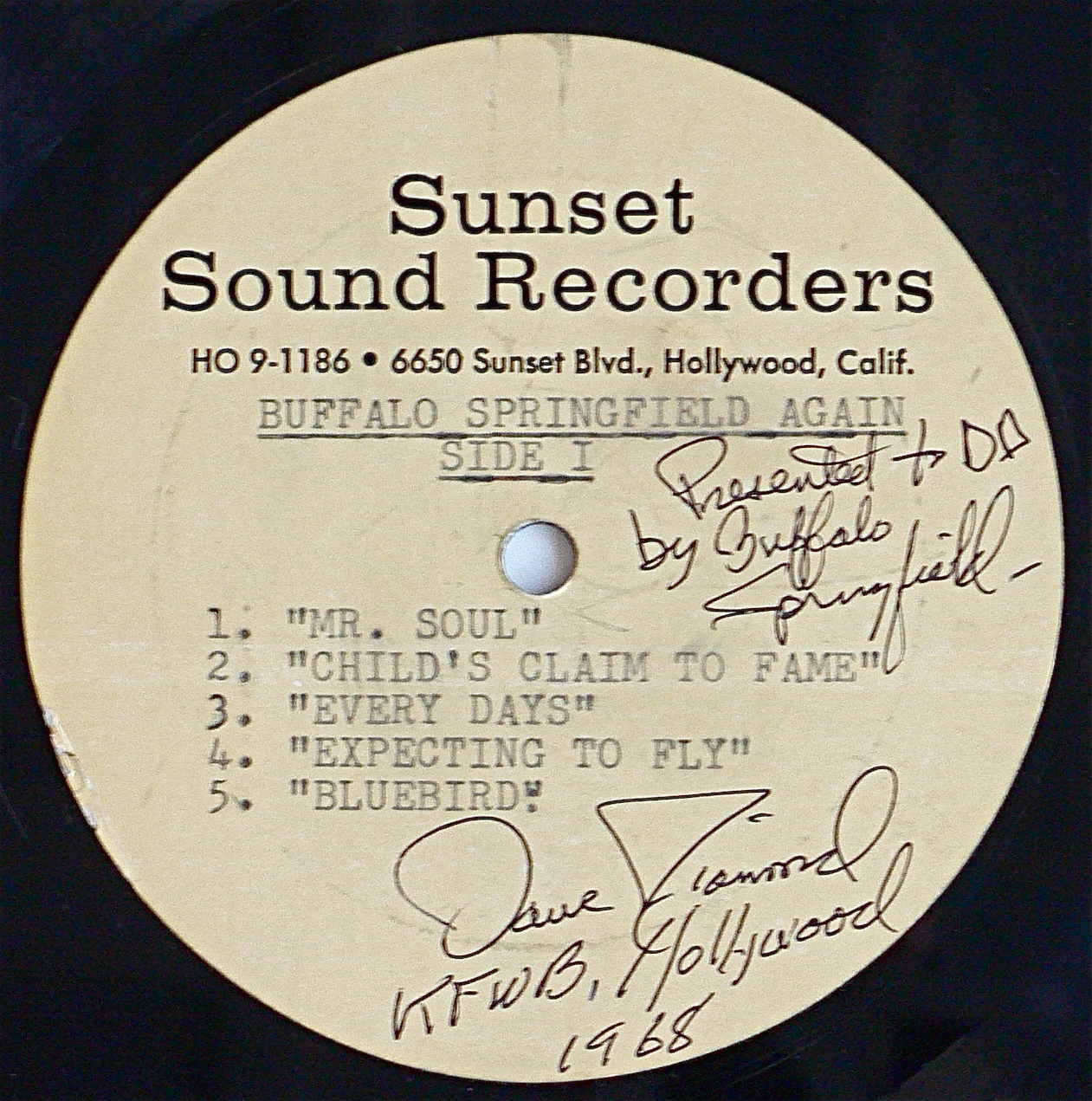
Buffalo Springfield Again was released in November 1967. Some of the band's tasty music features Mr. Soul, Rock & Roll Woman, Bluebird, Sad Memory, and Broken Arrow.
In January 1967, Bruce Palmer was deported for possession of marijuana but returned to the group at the beginning of June, while Neil Young was temporarily absent (guitarist Doug Hastings filled in for Young during this period). The band, with David Crosby sitting in, played at the Monterey Pop Festival. Also, the band toured as support for the Beach Boys during early 1968.
Jim Messina
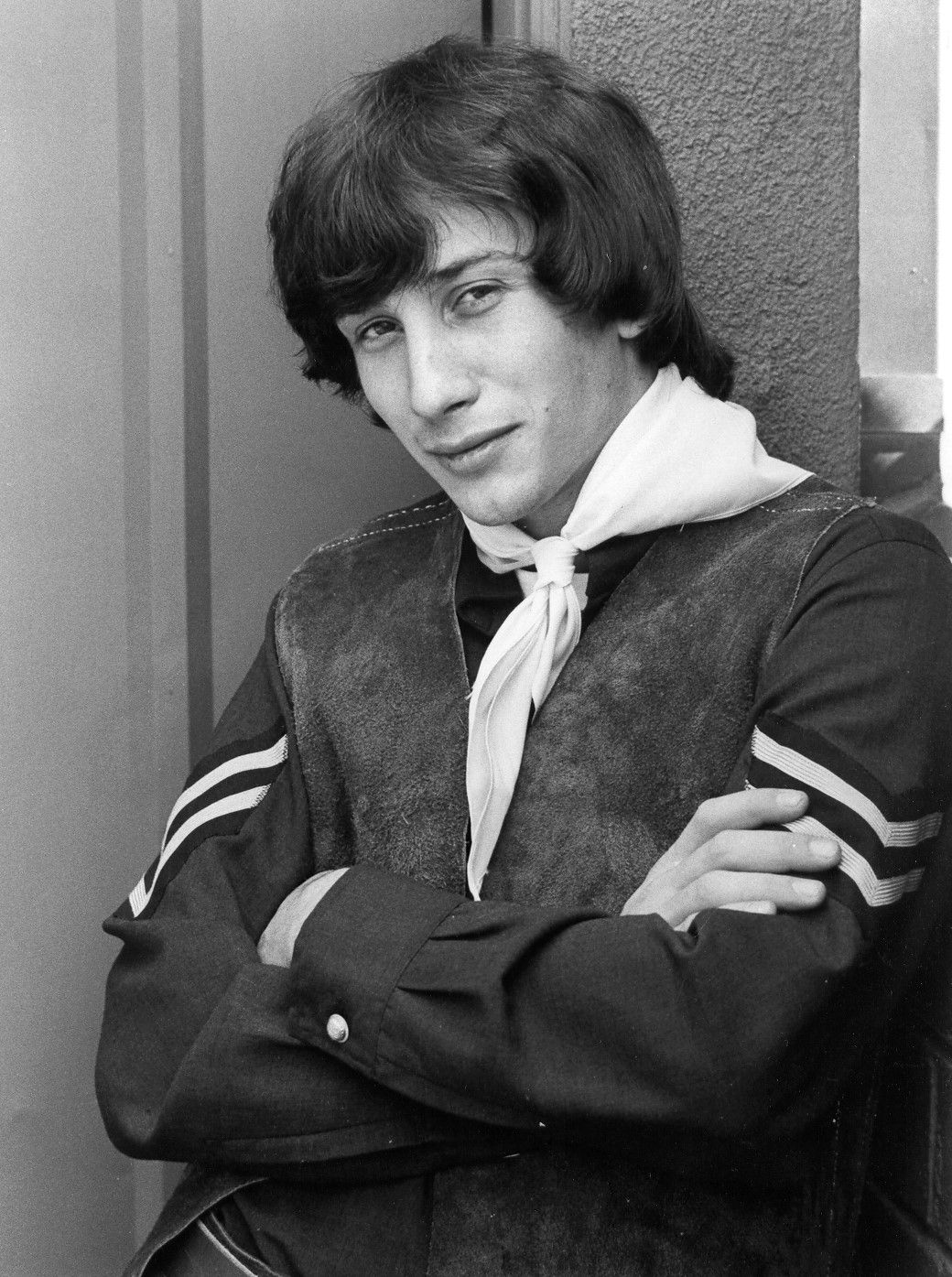
In January of that year, after Palmer was again deported for drug possession, Jim Messina, who had worked as engineer on the band's second album, was hired as a permanent replacement on bass. During this period Young began to appear less and less frequently, and he often left Stills to handle lead guitar parts at concerts.
Recording sessions were booked, and all the songs that appeared on the final album were recorded by the end of March, usually with Messina producing.
Their third and final album, Last Time Around, was compiled and released shortly after the band's dissolution.
After several drug-related arrests and line-up changes, the group disbanded in 1968.
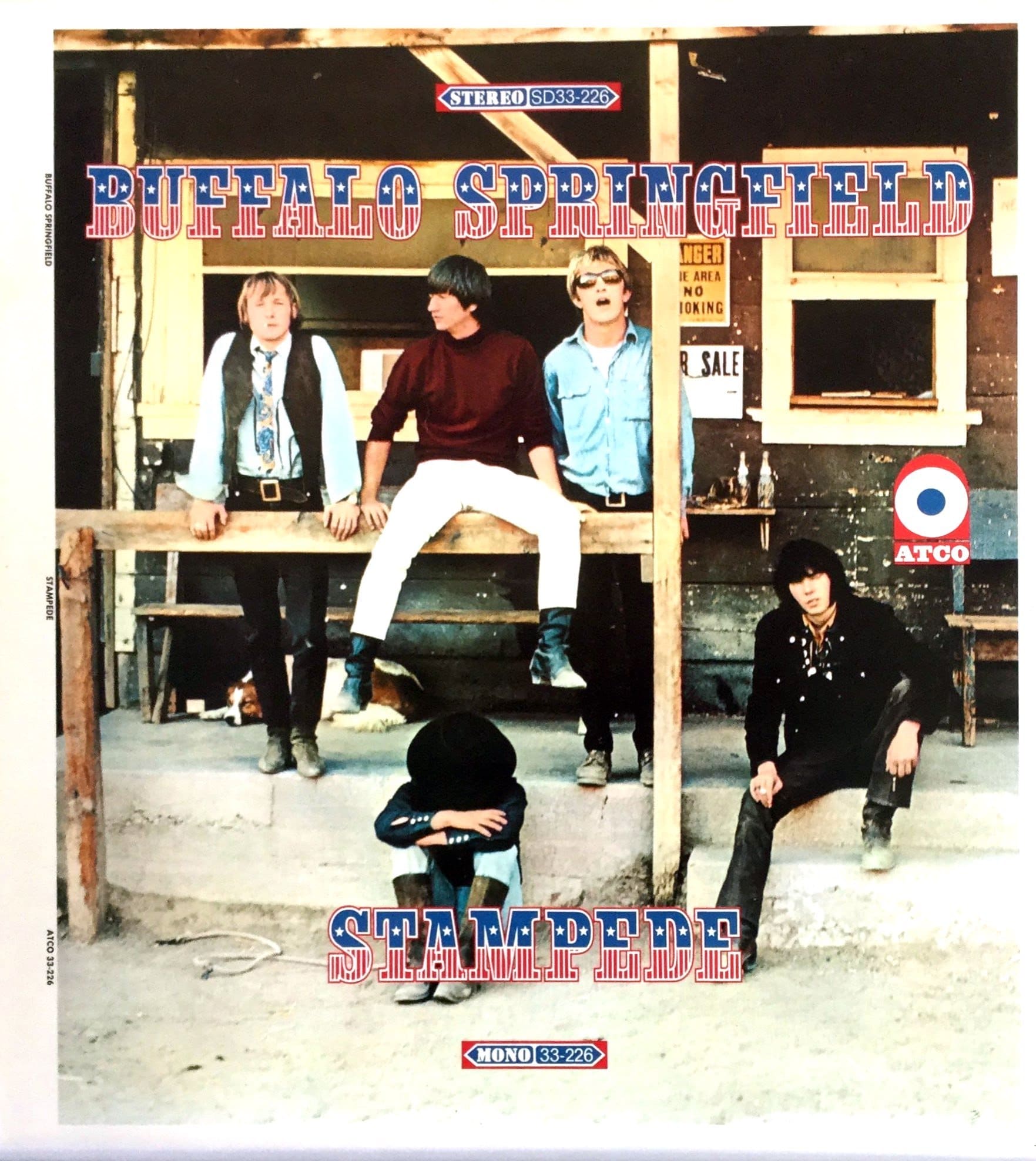
A strange Album which never was
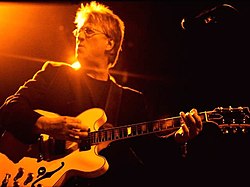
Richie Furay stated that “the original five of us had the magic that was special.”
.
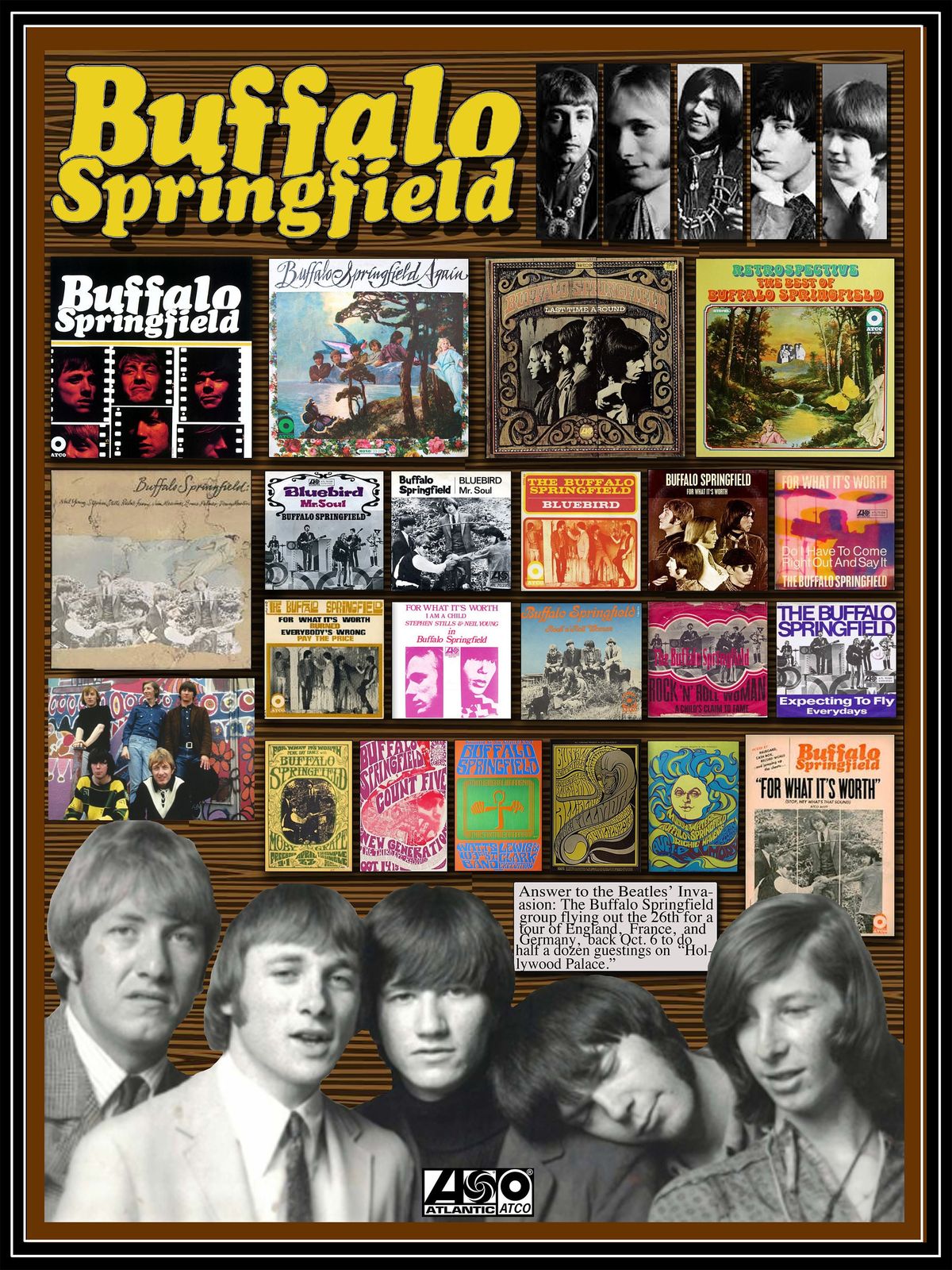
Buffalo Springfield’s three 1966-1968 albums were extremely popular over the Southern California airwaves before the rest of the world discovered them. You really had to live in Hollywood then to further understand and comprehend the initial impact of these regionally-birthed discs and artwork design.
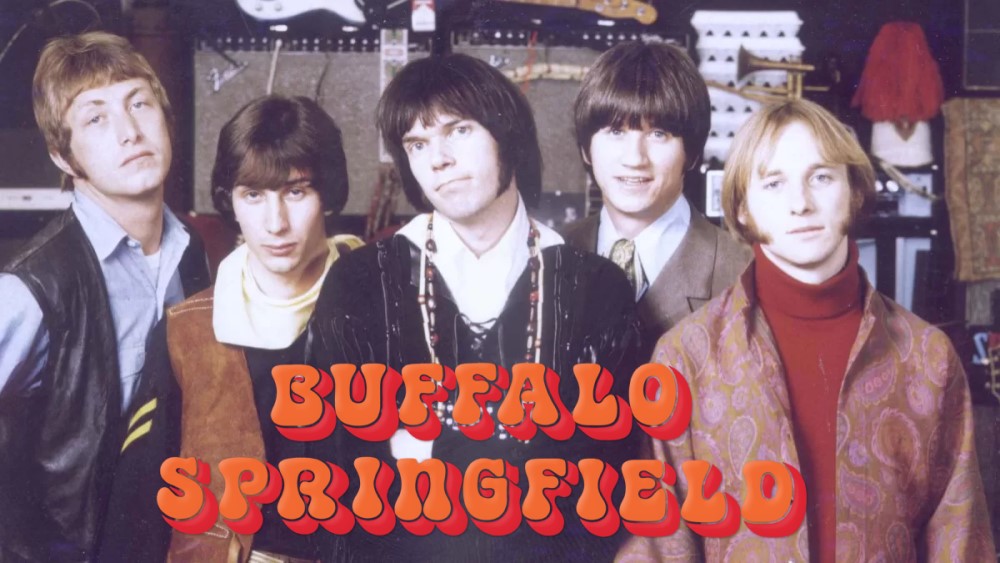
Personnel
Richie Furay – guitar, vocals (1966–1968, 2010–2012)
Bruce Palmer – bass guitar (1966–1968; died 2004)
Stephen Stills – guitar, keyboards, vocals (1966–1968, 2010–2012)
Neil Young – guitar, harmonica, piano, vocals (1966–1968, 2010–2012)
Dewey Martin – drums, vocals (1966–1968; died 2009)
Jim Fielder – bass guitar (1966, 1967)
Ken Forssi – bass guitar (1967; died 1998)
Ken Koblun – bass guitar (1967)
Doug Hastings – guitar (1967)
Jim Messina – bass guitar, vocals (1968)
Additional musicians
Rick Rosas – bass guitar (2010–2012; died 2014)
Joe Vitale – drums, vocals (2010–2012)
Rusty Young – steel guitar on "Last Time Around" (died 2021)
Studio Albums
| Year | Album details |
FRA [32] |
|
|---|---|---|---|
| 1966 |
|
80 | 122 |
| 1967 |
|
44 | — |
| 1968 |
|
42 |
Singles
| Year | Title | Peak chart positions | Certifications | Album | |||
|---|---|---|---|---|---|---|---|
|
US [36] |
CAN [37] |
NZ [38] |
|||||
| 1966 | "Nowadays Clancy Can't Even Sing" b/w "Go and Say Goodbye" |
110[A] | 75 | — | Buffalo Springfield | ||
| "Burned" b/w "Everybody's Wrong" |
— | — | — | ||||
| 1967 | "For What It's Worth"[B] b/w "Do I Have to Come Right Out and Say It" |
7 | 5 | 19 |
|
||
| "Bluebird" b/w "Mr. Soul" |
58 | 38 | — | Buffalo Springfield Again | |||
| "Rock 'n' Roll Woman" b/w "A Child's Claim to Fame" |
44 | 37 | — | ||||
| "Expecting to Fly" b/w "Everydays" |
98 | 41 | — | ||||
| 1968 | "Uno Mundo" b/w "Merry-Go-Round" |
105[A] | — | — | Last Time Around | ||
| "Special Care" b/w "Kind Woman" |
107[A] | — | — | ||||
| "On the Way Home" b/w "Four Days Gone" |
82 | 86 | |||||
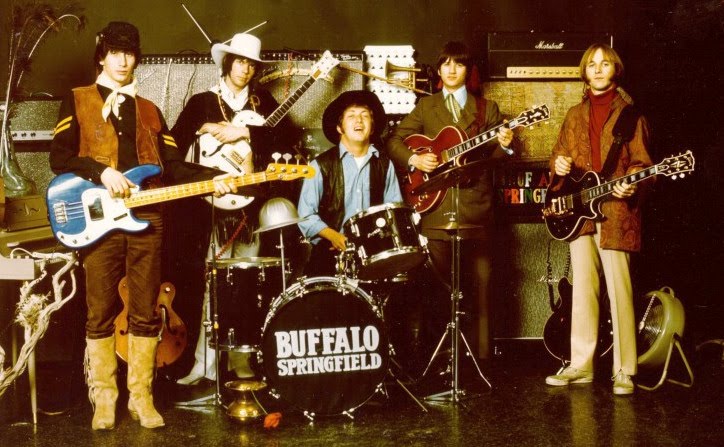
Buffalo Springfield's time was short -- they formed in 1966 and split in 1968 -- but their legacy was vast. Some of their legend was cultivated in the ensuing decades, after founding members Richie Furay, Stephen Stills, and Neil Young went on to fame either on their own or with such groups as Poco and Manassas, but much of it rested upon For What It's Worth, a protest song written and sung by Stills, that not only became their Top Ten breakthrough in 1967 but their enduring anthem, eventually serving as shorthand for all the political turmoil of the 1960s. So popular was For What It's Worth, it threatened to obscure how instrumental Buffalo Springfield's original run of three albums were in reshaping the sound of rock & roll in the late '60s.
Nominally a folk-rock band, Buffalo Springfield also showed a facility with country-rock, psychedelia, soul, and hard rock, all the while embracing the possibilities of the recording studios of Los Angeles. Buffalo Springfield Again made their 1967 masterwork, in particular showcased the group's expansive reach and if that musicality didn't result in hits they would never again cracked the Top 40 .