

As I remember it, the 1980s was a decade in which the genre known as basic meat & potatoes rock & roll began to undergo a myriad of changes. The punk rock revolution was underway but didn't really become a worldwide "thing" like Beatlemania in the 60s.
Most suburban listeners weren't lining up at record stores to buy albums by punk outfits like the Ramones and The Clash. Instead, their musical tastes gave rise to a style of rock called "New Wave". New Wave acts, such as Elvis Costello & The Attractions and Squeeze, were making records that reflected an AM radio pop musical style.
With the advent of MTV, New Wave seemed to overpower punk rock and, as time went on, the genre known as rock & roll would begin to fragment into many different styles.
“The 80s decade was one of great upheaval and innovation, and the seeds it planted continue to flourish. It was a time when disco and punk were in tatters, its artists rebuilding from the rubble with new innovations to birth hardcore and new wave.
Rock was getting more ridiculous, with Aqua-Net to spare, but it was also paring back into the thoughtful nexus that would someday be called indie rock—or it was throwing up pentagrams, getting dirtier and meaner, and turning into metal. Jazz and ambient were pushing their experimental borders by getting cinematic and free.” (Pitchfork Magazine)

New Wave suddenly moved away from traditional blues and rock and roll sounds to create rock music (early new wave) or pop music (later) that incorporated disco, mod, and electronic music. Initially new wave was similar to punk rock, before becoming a distinct genre. It subsequently engendered sub-genres and fusions, including synth-pop.

Another element that defined rock & roll in the 80s reminded me of of the early sixties. The 80's hit parade featured a lot One Hit Wonders that captured the ears of the public but many of these artists never made much of an impact with regards to album sales but many of the songs had me buying singles once again.
Some of the One Hit Wonders of which I speak were songs like Haircut One Hundred (Love Plus One), Men Without Hats (Safety Dance), The Vapors (Turning Japanese), Boomtown Rats (I Don't Like Mondays), Soft Cell (Tainted Love), After The Fire (Der Kommisar), A Flock Of Seagulls (I Ran So Far Away), Talk Talk (It's My Life) and Till Tuesday (Voices Carry).
It's also interesting to note that today's music charts are once again filled with One Hit Wonders.
It seemed immediately obvious that compact discs definitely influenced the way music sounded. Everything sounded much cleaner and that didn't necessarily mean that the music was better sounding.
As I started to purchase compact discs, I noticed how the sound of compact discs lacked warmth.
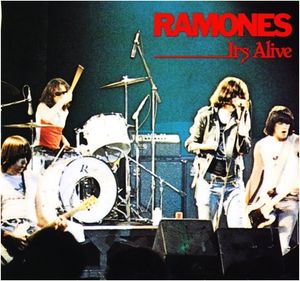
There was one absurd moment when I was at a party and a person put on the CD version of the Ramones 1977 live album, It's Alive. Hearing the raw sound of the Ramones sounding so polished caused me to turn to the person who put that CD on and said, "This is a joke, right?"
Another factor that made me dislike compact discs was when I later learned that compact discs cost less to manufacture than vinyl albums and yet the music labels charged twice as much for the CD version of an album thereby ripping off music fans to a great degree.

"Say, what's your beef with the music of the 80s anyhow??"
Here's an article from the NPR site that inspired me to write this blog post:
Computer Scientists Prove 80s Pop Music Is Boring
“Pop music is dead...You’ve heard the refrain dropped by nostalgic music lovers at backyard barbecues. And it’s no surprise. Everyone thinks the tunes of their generation marked a sort of cultural pinnacle and that music has since become bland."

Of the three revolutions, 1964 was the most complex, enriching the styles of soul and rock, before ultimately spawning the dance crazes of funk and disco. The trends seems to have come at the expense of Doo Wop, which dropped off the charts.
Music historians attribute this wholesale change to the British Invasion of the early 1960s, when the Beatles and the Rolling Stones arrived in America and were followed by dozens of other Brit bands.

While I know some folks reading this blog post might be offended by my overall perspective regarding the music of the 1980s, there was some credible music to be had but much of the time, mediocrity was the order of the day.

Here’s a list of some of the albums that got me through a decade whose music (at various times) reminded me of processed cheese:

REMAIN IN LIGHT > TALKING HEADS 1980
A lot of people don't realize this, but Remain in Light was the worst-selling Talking Heads record ever, says drummer Chris Frantz. Financially, we took a beating on that one, says David Byrne.
At the time, it was a really hard sell. The reaction that we heard was that it sounded too black for white radio and too white for black radio. Remain in Light may have been a commercial disappointment, but musically, the band's 1980 album — which combines funk, disco and African rhythms — was years ahead of its time.
IMPERIAL BEDROOM >
ELVIS COSTELLO & THE ATTRACTIONS 1982
Elvis Costello's Imperial Bedroom is a magnificent album in many ways. Various elements such as Costello's brilliant songwriting and the crisp production by Geoff Emerick make this a must-listen album for sure. While the album was not wildly popular, it has gained much respect from music lovers over the years.
"Having gotten country out of his system with Almost Blue, Elvis Costello returned to pop music with Imperial Bedroom -- and it was pop in the classic, Tin Pan Alley sense. Costello chose to hire Geoff Emerick, who engineered all of the Beatles' most ambitious records, to produce Imperial Bedroom, which indicates what it sounds like -- it's traditional pop with a post-Sgt. Pepper production.
Essentially, the songs on Imperial Bedroom are an extension of Costello's jazz and pop infatuations on Trust. Costello's music is complex and intricate, yet it flows so smoothly, it's easy to miss the bitter, brutal lyrics. The interweaving layers of Beyond Belief and the whirlwind intro are the most overtly dark sounds on the record, with most of the album given over to the orchestrated, melancholy torch songs and pop singles.
Never once do Costello & the Attractions deliver a rock & roll song -- the album is all about sonic detail, from the accordion on The Long Honeymoon to the lilting strings on Town Cryer. Of course, the detail and the ornate arrangements immediately peg Imperial Bedroom as Costello's most ambitious album, but that doesn't mean it's his absolute masterpiece. Imperial Bedroom remains one of Costello's essential records because it is the culmination of his ambitions and desires -- it's where he proves that he can play with the big boys, both as a songwriter and a record-maker. It may not have been a commercial blockbuster, but it certainly earned the respect of legions of musicians and critics who would have previously disdained such a punk rocker."
LET IT BE > THE REPLACEMENTS 1984
In 1984, The Replacements were a band that reminded me that the true wild nature of rock & roll was still alive and well.
From track one (I Will Dare) to track 11 (Answering Machine), The Replacements album Let It Be plays like an eclectic masterpiece of pop music. But, while Let It Be was, and remains, a darling of the critical elite—No. 241 on Rolling Stone’s list of 500 greatest albums of all time—it was an absolute failure upon release, moving a mere few thousand copies...While Let It Be does contain its share of punk rock bombast with tracks like We’re Comin’ Out, Gary’s Got A Boner, and Seen Your Video, the best songs and truest statements are delivered in the most pop formats imaginable. Androgynous is, in essence, a piano ballad.
The guitar-arpeggiated Sixteen Blue has more in common with the earliest manifestation of The Beatles than it does with The Buzzcocks. And then there’s the greatest punk rock sin of them all: a cover of Kiss’ Black Diamond.
In the most literal sense, The Replacements adhered closer to the non-conformist ethos purveyed by their punk rock forbears than those who most loudly propagated it ever did. Even before they had a real career to sabotage they were sabotaging themselves. Even before they had a real audience to subvert, they were actively subversive. This extends to this record’s name itself, which Westerberg later explained was 'our way of saying that nothing is sacred, that The Beatles were just a fine rock ’n’ roll band. We were seriously gonna call the next record Let It Bleed.'
The modern day legacy of Let It Be is perhaps most closely aligned with that of another low-selling, now-iconic record released by the New York art-rock outfit, the Velvet Underground.
In 1982, Musician magazine famously asked Brian Eno about the commercial flop that was The Velvets’ first release. He responded with the now-classic quote, 'I think everyone who bought one of those 30,000 copies started a band.' That same sentiment can be applied to Let It Be. It is the ultimate bridge between what came before it and what followed in its wake.
Larger musical movements aren’t created in a vacuum. In most cases they are simply manufactured by those looking to capitalize on the success of a singular entity. The British Invasion rode in on the coattails of The Beatles, Jimi Hendrix made psychedelia acceptable, and everyone and their mother donned a flannel shirt in the wake of Nirvana’s success.
The real sticking point of this process is that few artists or entities ever live up to the artistic truth of what came before them. That’s why we don’t celebrate Herman’s Hermits or Strawberry Alarm Clock. The best art isn’t accomplished when the artist is attempting to do something new just for the sake of doing something new or, conversely, trying something old because, hey, it worked once. The best art comes out of artists who are willing to take a chance because what they are creating is equally stimulating and rewarding. Ultimately, that’s just what The Replacements did with Let It Be.
RAIN DOGS > TOM WAITS 1985
Tom Waits is one of my favorite songwriters. When he started out, Waits took on the persona of a beat generation hep cat but by the 80's he wisely deconstructed his approach to his art which deepened his songwriting in such a meaningful way.
Tom Waits had refreshed his sound on Swordfishtrombones two years earlier by moving beyond piano and guitar to dabble with a wider variety of instruments, and on Rain Dogs his repertoire continued to expand, with pump organs, accordions and bowed saws...The range of musical styles sprawled, too, and Rain Dogs contains cabaret numbers, country songs, gospel, polkas, ballads and sea shanties.
Waits is a sucker for the theatrical, and the ragbag cast here is at the carnivalesque end of things, plus sad-eyed dames and a girl with tattooed tear – one for every year he's away, she said – at the late-night, romantically downbeat, Edward Hopper-ish end. Waits can be extremely funny – I love the hilariously grotesque lineup of stingy senior relatives on Cemetery Polka – but he can also rein in his more bacchanalian impulses and write spare, heartbreaking beautiful songs, such as Hang Down Your Head, that always make me want to shush people so that they can experience it with the degree of reverence that I, with a convert's zeal, believe it deserves.
SKYLARKING > XTC, 1986)
Skylarking (XTC, 1986) – I’ve always been an XTC fan and this lush sounding album is perhaps their most realized effort. Arising from a series of difficult sessions with producer Todd Rundgren (‘As if there were any other kind of sessions with Todd,’ say the New York Dolls), Skylarking polishes up the group's sometimes thorny pop and creates a shimmering, technicolor gem that I'm pretty sure every critic everywhere has called pastoral—and for good reason. Not only does it sound wholly organic with its lush strings and instrumentation, but it also conveys an almost spiritual quality in its underlying wisdom, Dear God notwithstanding. Skylarking is so nearly perfect to my way of thinking that it's hard to actually pull it apart and turn it into words.
BRING THE FAMILY > JOHN HIATT 1987
Bring the Family was John Hiatt's breakthrough album and it quickly added fuel to the growing Americana music genre.
In 1987, John Hiatt, clean and sober and looking for an American record deal, was asked by an A&R man at a British label to name his dream band. After a little thought, Hiatt replied that if he had his druthers, he'd cut a record with Ry Cooder on guitar, Nick Lowe on bass, and Jim Keltner on drums. To Hiatt's surprise, he discovered all three were willing to work on his next album; Hiatt and his dream band went into an L.A. studio and knocked off Bring the Family in a mere four days, and the result was the best album of Hiatt's career.
The musicians certainly make a difference here, generating a lean, smoky groove that's soulful and satisfying. Ry Cooder's guitar work is especially impressive, leaving no doubt of his singular gifts without ever overstepping its boundaries...but the real triumph here is Hiatt's songwriting. Bring the Family was recorded after a period of great personal turmoil for him, and for the most part the archly witty phrase-maker of his earlier albums was replaced by an wiser and more cautious writer who had a great deal to say about where life and love can take you.
Hiatt had never written anything as nakedly confessional as Tip of My Tongue or Learning How to Love You before, and even straight-ahead R&B-style rockers like Memphis in the Meantime and Thing Called Love possessed a weight and resonance he never managed before. But Bring the Family isn't an album about tragedy, it's about responsibility and belatedly growing up, and it's appropriate that it was a band of seasoned veterans with their own stories to tell about life who helped Hiatt bring it across; it's a rich and satisfying slice of grown-up rock & roll.
SIGN O' THE TIMES >PRINCE
Sign O’ The Times (Prince, 1987) – Along with The White Album and Exile on Main Street, Sign O’ the Times is the template for the perfect double album. Take an artist at the peak of his powers, give him the space to work all his crazy ideas to their logical conclusion, and then edit the results into a varied four-sided collection.
Club classics (Hot Thing, U Got the Look), ballads of epic rock (The Cross), sexy R&B (Adore), and flat-out amazing pop songs (I Could Never Take the Place of Your Man, If I Was Your Girlfriend) are all here in abundance. Oh yeah, he wrote, played, produced, and sang just about everything himself, too. Was he the greatest quadruple threat ever? Listen and decide for yourself.
TIDDLYWINKS > NRBQ
Every new album from NRBQ is an adventure. From the get go, the band’s main focus was to play…everything and anything!
NRBQ's eclectic style made it impossible to market, but was an absolute joy to their devout followers. The sound of the Tiddlywinks album is crisp and the committed, performances are proof of NRBQ's legacy.
Regardless of how tough a day you've had, listening to the wonderful Tiddly Winks will make you break out with a goofy smile. That's a testament to the band's spirited talents and ageless musicianship.
GET HAPPY! > ELVIS COSTELLO & THE ATTRACTIONS
Get Happy is perhaps the most fun album that Elvis Costello every invented. The songs captures the atmosphere of AM radio in it's best energy. i often think of this particular a record as a time machine.
There was a time when I was in a band and we were in the midst of non-stop arguments and fisticuffs and suddenly I found myself singing the lyrics to Costello's excellent song, “The Imposter” and it made perfect sense.
Get Happy!!, which is influenced by R&B, ska and soul music of the 1960s helped create a departure from Costello's prior works. Two cover songs, Sam & Dave's "I Can't Stand Up for Falling Down" and the Merseybeats' "I Stand Accused", are included. In contrast to the upbeat music, the mostly downbeat lyrics cover recurring themes such as doomed romances. Initial album sleeves reversed the side labels, which was corrected for later reissues. The cover art reflects the soul influence and was designed to resemble a 1960s Stax record, with initial copies boasting a pre-worn sleeve.
Initially delayed due to a dispute with Warner Bros. and Costello's former label Radar, Get Happy!! charted at number two in the UK and number 11 in the US, but sold less than Armed Forces. It was supported by a UK tour and three singles, of which "I Can't Stand Up for Falling Down" reached the UK top five. The album received positive reviews from music critics. Many focused on the quantity of tracks, which they felt varied in quality, although others gave high praise to the record and Costello himself. It is retrospectively viewed as one of his best works. Appearing on lists of the best albums of the 1980s.
While Bob Dylan had been battling his ability to reach the same level of songwriting with which he knocked us out over the decades. Upon the release of the Oh Mercy album it seemed that Bob Dylan had found solid ground as a songwriter once again.
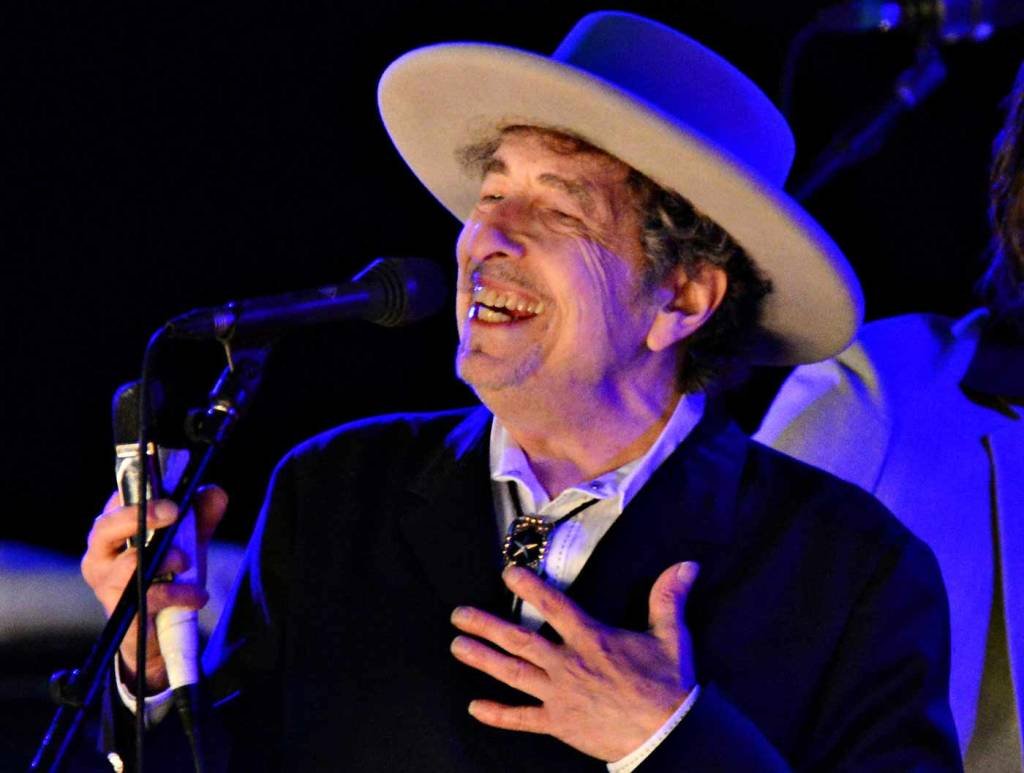
“Oh Mercy was hailed as a comeback, not just because it had songs noticeably more meaningful than anything Bob Dylan had recently released, but because Daniel Lanois' production gave it cohesion. There was cohesion on Empire Burlesque, of course, but that cohesion was a little too slick, a little too commercial, whereas this record was filled with atmospheric, hazy production -- a sound as arty as most assumed the songs to be. And Dylan followed suit, giving Lanois significant songs -- palpably social works, love songs, and poems -- that seemed to connect with his past.
Oh Mercy exists on its own plane, and the same is true of New Orleans, where it was fashioned…The slow-burn noir of Oh Mercy exudes the untouched gothic mystery of its New Orleans environs—the humid timbre of the recordings shaped heavily by their setting. The region’s enigmatic spirit affected Dylan’s writing, which drifts between the worldly and introspective, setting a decidedly postmodern tone. Uncertainty is a mossy through-line, connecting anxieties both political and romantic, as if there was no dividing line between global unrest and personal disorder." (aquariumdrunkard.com)

Well that's about all I can say about the 80's
Heh Heh Heh!

CDs
RARE ALBUMS (Vinyl)
BUMPER STICKERS
PINS
PICTURES OF ARTISTS
& MORE!